
Cosplayers are not Ancients, however, and do not have access to a ready supply of petaloudai. Even a garment so seemingly simple as the sophist robes, with few features and fewer colors, can present many challenges that are solved uniquely from cosplayer to cosplayer. I saw creators scouring for fabrics, puzzling over the robes’ oddly complex construction, and sharing embroidery and 3D model files. Seasoned and new cosplayers alike connected over their shared interest in the robes donned by beloved NPCs and our own Warriors and Azems, their differing experiences, styles, and methods all unified to the same goal.

Photographer: Atlas_The_Doggo
The cosplayers with whom I spoke all ensured they were well-prepared in the pre-production stage of their work before even touching a sewing machine. Em, known as EmUnArum online, describes herself as a “‘measure four times, cut once’ kind of seamstress,” wrote that she “typically work[s] out any potential issues” before starting construction. OiNoya echoed in her own interview that she “eliminated a lot of need to change during the construction process” by ensuring she completed “a lot of testing and planning ahead of time.” Much of that initial testing was focused towards the costume’s most visible feature and the backbone of its structure: the fabric. As the base of the entire outfit, the cosplayer’s choice in fabric would determine many construction decisions concerning patterning, shaping, and choosing materials for other details of the outfit. Selecting the fabric that would best serve their purposes was essential to avoid wasting time, budget, and resources. Naaru, who goes by CosplayNaaru online, was adamant in her interview that “the fabric choice really takes a lot of time,” and given the amount of yardage needed for the sophist robes, she “couldn’t have the luxury of hesitation,” refusing to buy anything until she was certain of her final choice.
Kappakay took the color of the sophist robes into careful consideration during his own design phase, as he wanted the robe to have texture, weight, and flow, while avoiding a fabric that was only “pure black.” Eventually, he found “a lactose knit” that matched his requirements, even going so far as to buy the entire supply of knit from his local fabric store in preparation for making not just one, but three robes. OiNoya, meanwhile, focused on the apparent heaviness of the robes in-game, and chose “a heavyweight cotton/duck cloth” in a “dark charcoal gray” color to achieve a look with similar heft and wear without too much stiffness. Environment also served as a major consideration in fabric choice, such as in Joyce’s (also known as JuiceCos) decision to use linen. Found often in pillowcases and sheets, linen “ is known for being sweat wicking and a ‘cooler’ to the touch fabric.” For Joyce, living in the hot and humid climate of Florida, linen’s ability to be lightweight and breathable without sacrificing movement and texture, made it her ideal choice of fabric. Em also echoed the importance of a textured fabric to break up the outfit’s otherwise solid color, and although her search took her “almost two months to find the exact kind” of linen that provided the exact color and draping she wanted, she was steadfast that the time spent in her “fabric hunt . . . was worth spending.”
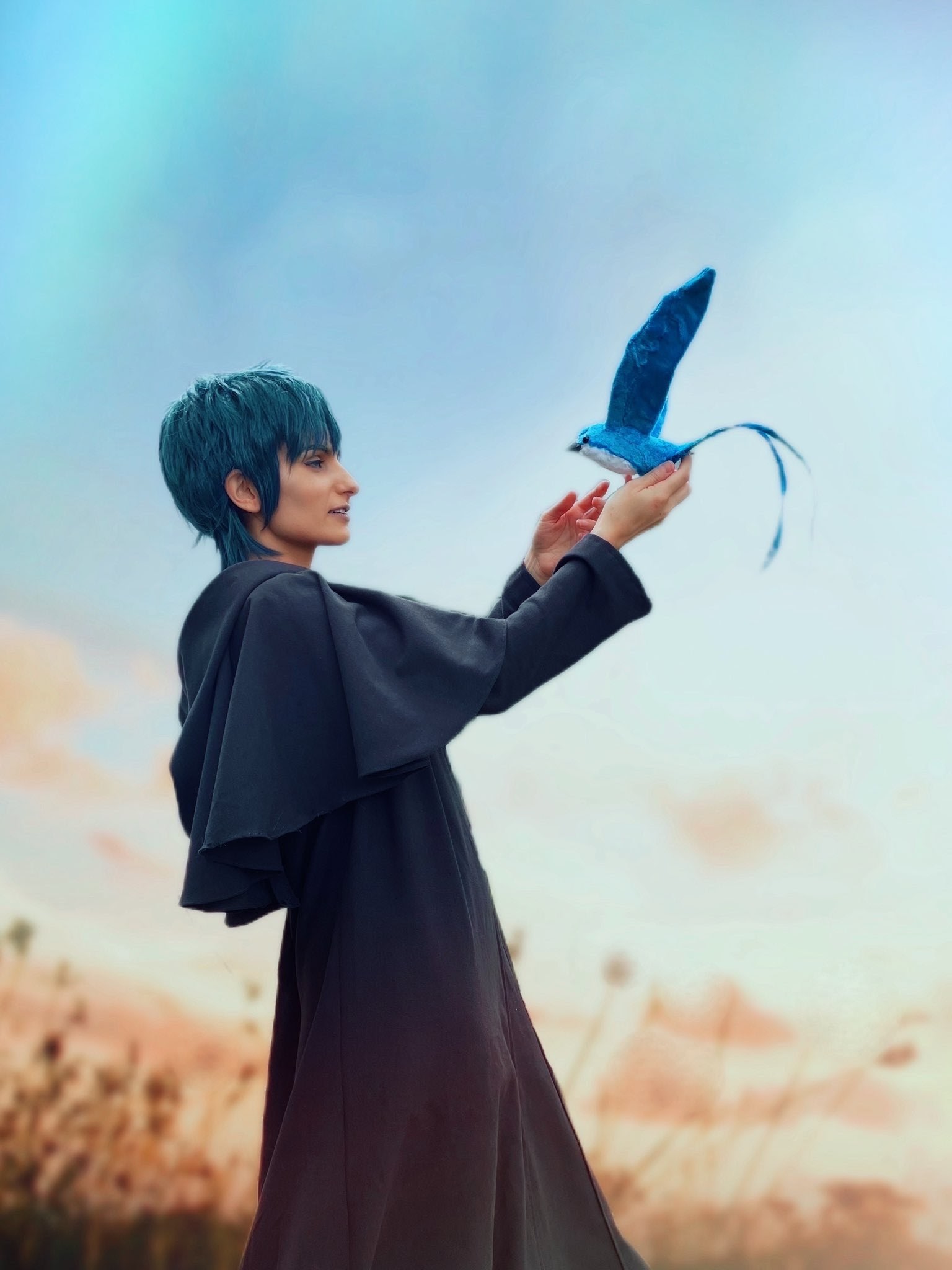

Photographers (left to right): OiNoya, Sirah
Instilling a creator’s unique creative touch in the design of a costume with so little detailing can prove difficult—and in the case of the sophist robes, often unwanted. Em “made an effort to not let this happen,” and “felt it was in the spirit of the design to make it as neutral as possible.” Careful choice in fabric also proved a key aspect of the costume to reflect each creator’s own unique approach and perspective to another otherwise plain robe. Crow Dalova drew on his historical knowledge of fabrics for his personal choice of linen for the robes. In recalling his own decisions regarding his robe construction, Crow explained that because linen “is an ancient fiber that was used on its own and blended with other fibers such as wool and cotton, and it was the everyman’s fiber for everything from Egyptian garments up through Roman and particularly Greek togas and chitons,” choosing the flax-sourced material made “the most sense . . . both from an ease of wear point of view and from a historical one.” On the more artistically-inspired end of the spectrum, Nikumonster—a cosplayer previously interviewed on Inquiries for her stunning Yugiri and Lyse cosplays—was immediately reminded “of Fritz Lang’s Metropolis (1927) and Blade Runner (1982), which are sci-fi films rich in Art Deco” when she first saw Amaurot and the Ancients in their simple and flowing robes. That inspiration in part led her to choosing “Liverpool fabric,” also known as “bullet fabric,” which is a “two- or four-way stretch polyester with a textured outside and smooth inside.” The “little repeating rectangle texture” of Liverpool fabric that “gives off a vibe like carbon fiber” makes it “very appropriate for sci-fi garments,” and she was thrilled for the chance to connect that to her Amaurotine robes, given the mix of science and Art Deco aesthetics of the fallen city. “I’m able to see inspiration in everything: every tiny detail, color, and texture, regardless of whether it’s clearly seen or understood by others or not,” Niku wrote in her interview. “It just makes me happy.”
Nikumonster tackled the Ancients’ robes as early as their first introduction in Amaurot, and thus was on the frontline of cosplayers to face the initial challenge of the outfit’s construction after her choice in fabric was decided. She found that “the shape of the hood did not make any sense,” as “the sides of the front stick out horizontally… [and] fabric doesn’t fall like that in reality unless you have a huge amount of volume and weight.” OiNoya similarly joked that “defying gravity as much as possible from top to bottom is the Final Fantasy standard!”, but that certainly didn’t make the cosplayers’ decisions any easier. Niku settled on flat-lining her Amaurotine hood with a medium weight cotton, then handsewing horsehair braid along its edge with a padstitch. Flatlining is the process of sewing together two pieces of fabric to create a single section, often combining a decorative fabric with a more common one such as cotton. The final product, after adding “a white satin lining for some added sheen,” proved structured yet “subtle,” without looking “stiff,” as the unseen flatlining provided more stability than the visible fabric alone, giving it additional weight and fullness in its flow.
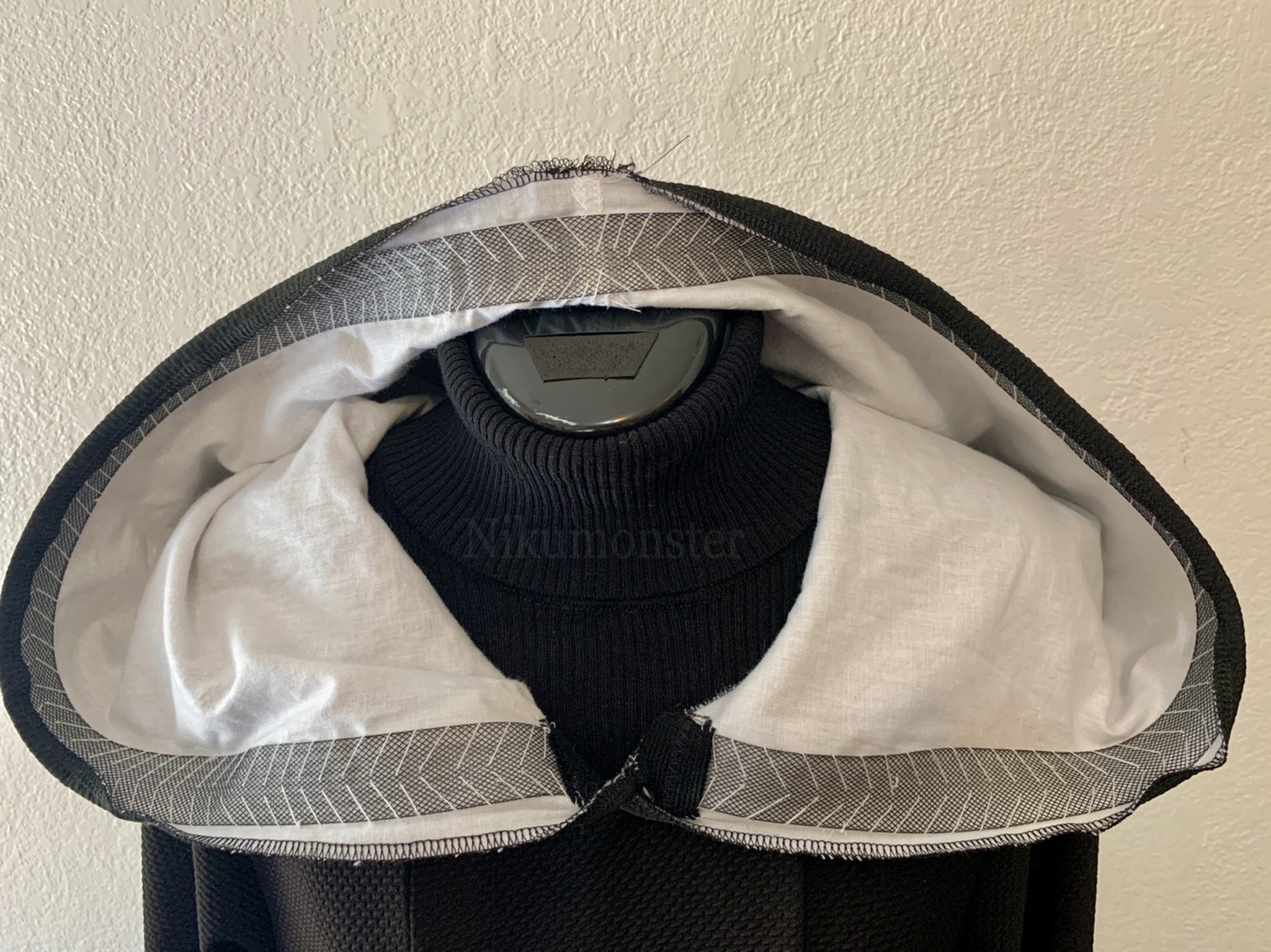
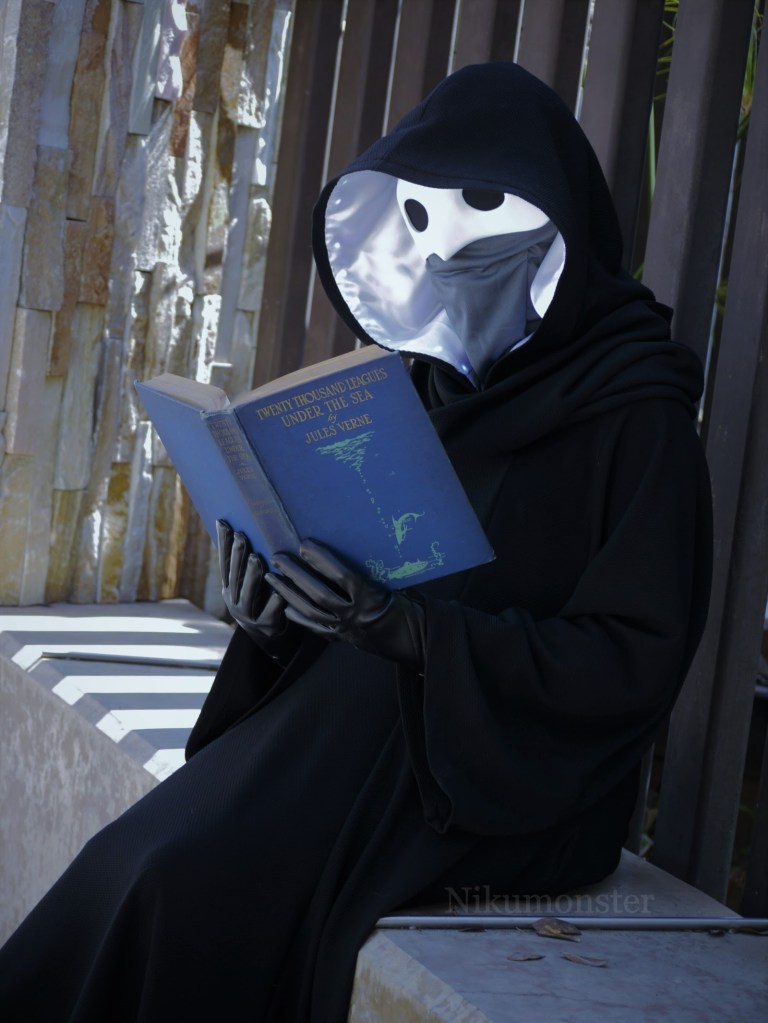

In what will become a common theme throughout the patterning the robes, creating structure where seemingly none exists was necessary to achieve its defiantly unrealistic draping. Whether through historical or artistic inspirations, each cosplayers’ approach to finalizing their pattern was as varied as their fabric choices. Despite Emet-Selch’s claim of unwavering similarity in the Ancients’ robes, Em found an unexpected hurdle in even locating accurate references for the robe’s cowl, discovering that “the cowl that hangs over the shoulders . . . [is] different in every piece of official art . . . which in turn is different from how they were rendered in-game.” After wrestling with the cowl’s varying length, its appearance as a single piece or several, and even if it was meant to lay flat or be gathered, Em knew she “simply needed to make a choice” and “looked to the original Ascian robes as reference,” but even then the cowl pattern “went through more revisions than anything else on the cosplay.” Em also noticed the “imposing silhouette” of the Ancients’ robes, and wanted to “retain the flow of the robes as much as possible,” without losing the striking shape of the outfit. Em eventually decided to reference Victorian nightgowns during her design phase until she was finally satisfied with the shape of “a two-yard circle skirt that slims in the chest area” to achieve the exact draping she desired. Structure can be created by numerous methods, however; much like Niku, wifeintheattic addressed the issue of structuring the garment by flatlining her fabric, opting for upholstery fabric to achieve the weight and structure implied by the outfit’s silhouette and movement.


Photographers (left to right): Wifeintheattic, Vaughn_ixi
Maru, known as Maruwins on Twitter, pointed out in her interview that “generally robes are more forgiving than anything with structure,” and that approachability allowed each creator to design their outfit to not their preferences but also, more often than not, to their resources. While every cosplayer interviewed was adamant about their careful preplanning, the step of actual construction can often introduce unexpected challenges that outweigh artistic preference. Kappakay, meanwhile, looked directly to the in-game robe for insight on how the outfit might be broken down into layers and pieces, and found that the apparent construction of the skirt only provided more confusion. While the split in the front of the robes suggested an underskirt, Kappa noticed that the skirt moved “as one unit.” Though he conceded that the animation was possibly a graphics-saving measure on the part of the developers, he also observed that Urianger’s Astrologian outfit, similar in style to the sophist robes, included the separate layer that he had expected. Faced with the options of making “a fake panel for the robe to get the same in-game flow,” as the sophist robe model suggested, or “an underskirt with the primary robe having a slit in the front to reveal said skirt,” as in Urianger’s robe, Kappa was ultimately pushed to his final decision by the availability of his chosen fabric. “Initially, I wanted there to be a skirt under the robes,” he explained, “but I ran out of fabric to make the skirts, so I had to add a fake triangle panel.” The opening in the front of the robe proved a puzzle for Naaru as well, who based the mock-up of her cosplay on a “long coat” and, like Kappakay, also opted for a fake panel due to her limitations in fabric amount and—another key resource for creators—time. Kappa similarly joked that he “was happy to have the robes done and fit everyone” for his group at a local convention, despite his own time crunch.


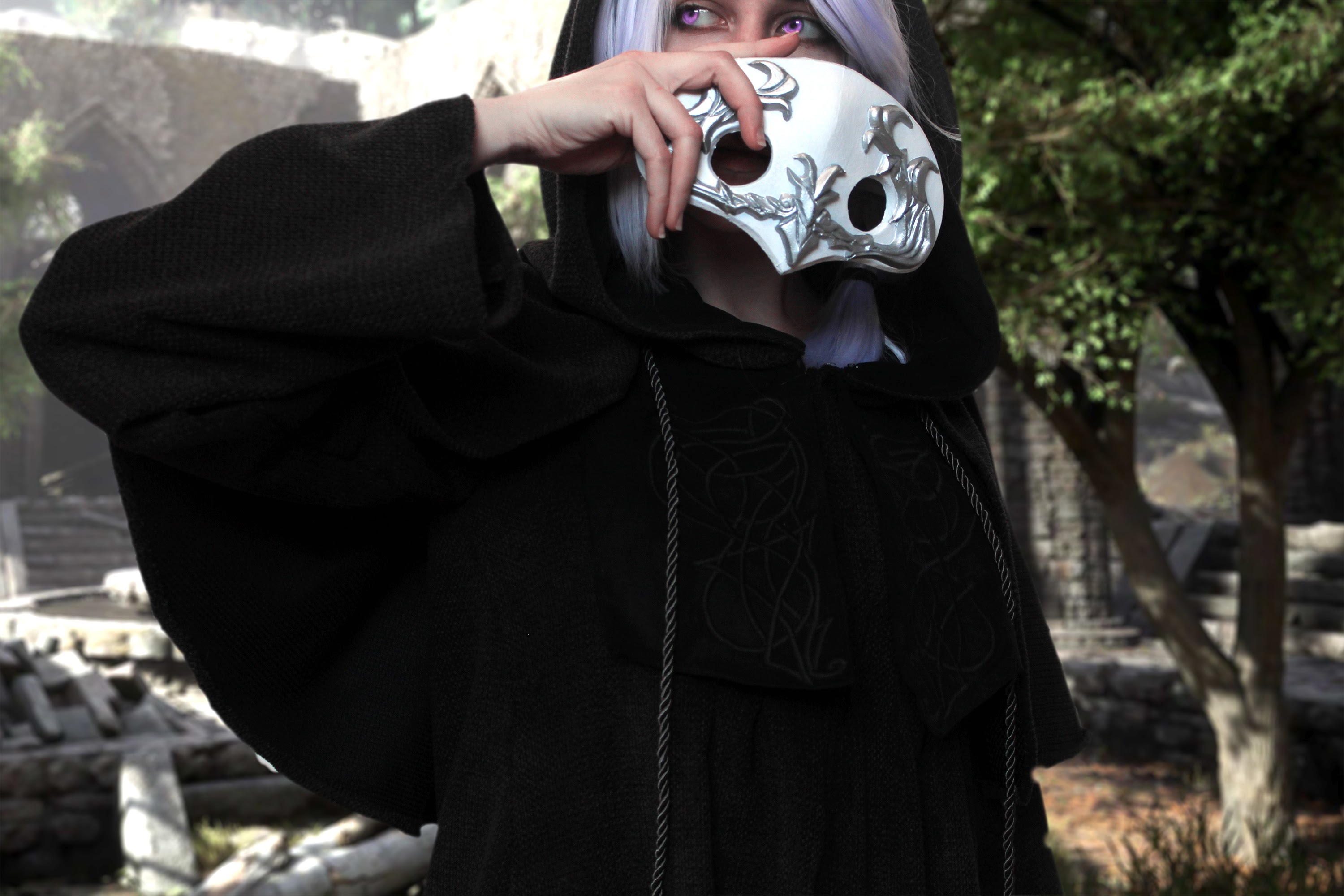
The skill to adapt a fictional design with a creator’s available resources can sound at times like compromise, but experienced creators understand that clinging to the honeymoon phase of design, when the highest ideal of every idea still feels possible, is ultimately a detriment to the joy and pride the finished piece deserves. Despite her limitations with time and materials, Naaru reflected that she made “some really good memories . . . and met some amazing people” while cosplaying Hythlodaeus at Japan Expo. Fewer hobbies can bond fans more strongly than cosplay, where respect for each other’s work so often ignores the compromises and hidden fixes the creator is so keenly aware of in their own finished products, focusing instead on shared joy for the characters and stories that inspired them to create in the first place.
Thanks for reading, and tune in on November 29th for the final part of this article! You can follow and support the cosplayers who graciously offered their insights for this article by checking out their social medias!
CosplayNaaru Twitter | Instagram
CrowDalova Carrd
EmUnArum Twitter | Ko-Fi
JuiceCos Twitter
Kappakay Twitter
Malindachan Carrd
MaruWins Linktree
Nikumonster Twitter
OiNoya Twitter
Wifeintheattic Twitter
 Inquiries of Art
I want the one Nikumonster is wearing, but no one makes them anymore 😦 the satin really makes it look like it glows, I love that tiny detail so much! Unfortunately I can’t sew without a pattern or I’d try tho make it myself. Amazing work!
LikeLike
will you guys ever be willing to sell the pattern ! I love how the cosplay looks and really want to try making my own but never came across anyone selling them anymore 😦
LikeLike
Hi there!! Em is actually still selling their pattern on their ko-fi! 😀 I hope you get to make a set yourself!
https://ko-fi.com/emunarum/shop
LikeLike