Cosplayers use an endless variety of tools and techniques to create their costumes. With a bit of know-how and patience, foam, paint, and fabric can transform a cosplayer into almost any character of their choosing – but what about a cosplayer who chooses to create that transformation directly on their body? Painter, sculptor, makeup artist – Grievervsk’s work could fit under many categories, and for him, that mix and meld of techniques that bring his visions to life is totally by design.
Though you’re an SFX (special effects) teacher now, how did that journey begin for you? Your makeup work requires the illusion of shaping and shading much in the same vein as the principles of traditional art. Do you have a background in painting and drawing, or any other studio art like sculpting?
Grievervsk: So basically my career went a little bit this:
I was a bit lost and didn’t know what to do with my life, until one day just out of pure curiosity I decided to investigate the world of personal image and dip my toes in as an aesthetician. In the middle of it I discovered bodypainting and SFX. The media that interested me the most to pursue my career was movies. I was a little terrified, but I gave it a try by self-learning. I advanced in my career and decided to tackle hair as a junior hairdresser while I was still practicing SFX by myself. At first I was only interested in practical SFX, but with time I liked both so I took on both artistic and practical ways.
When I finished I decided to join a makeup in cinema course for three years. That way I had to practice not only on myself but on models, and practice outside in movies and theater. In that course I learnt a bit of drawing, of how light and shadows transform makeup to make it as real as possible. When I graduated, the teachers there insisted that I study docencia, basically how to be a teacher. At first I was undecided, but I gave it a try and, from that I have been researching comics, manga, anime and many, many artists, on the many ways that they work. I also watch a lot of sculptors to learn to do prosthetics and cosplay stuff also.
Can you tell me about your initial design phase of a new SFX project? Do you spend a good bit of time designing through other means before you even touch FX products?
Grievervsk: When I’m a new project I always separate it into three phases: Research, design, and execution.
During the first phase I research artists with similar work. Then in the second phase, now that I have all the references that I need, I begin to make the overall design of how I want that project to be. Then execution is the moment I’m doing it as close as I can to the original design.
Who are some artists that most inspire your own work?
Grievervsk: I’m going to name a few for inspiration:
@itsmeishmi, @japhers, @KSilberne, @MCroft07, @LoryDraws, @ZachFlu, @madeyewlook, @ZiriO
And many, MANY more.
What was your first FFXIV SFX cosplay, and what about that character or design inspired you to start a project for it? Had you been playing FFXIV awhile before your first cosplay, or did it happen soon after you started up the game?
Grievervsk: Honestly, I think it was the Red Mage, the whole story of the elegant and yet deadly combination of sword and magic—that was my first in bodypaint and when I finished the cosplay.
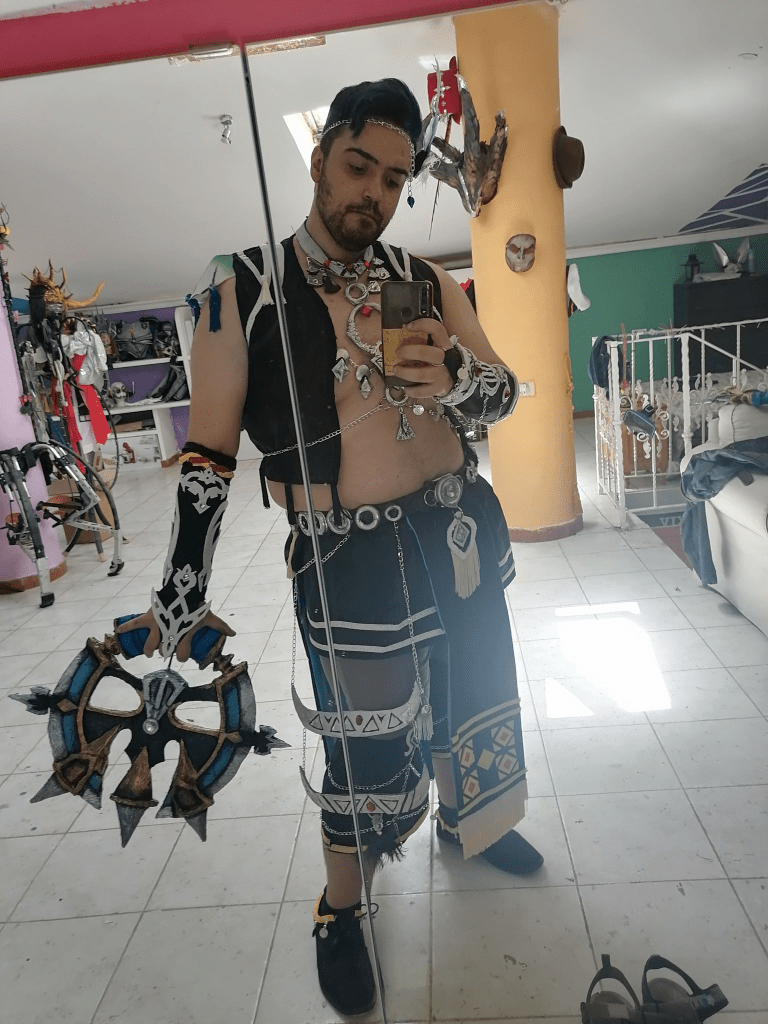
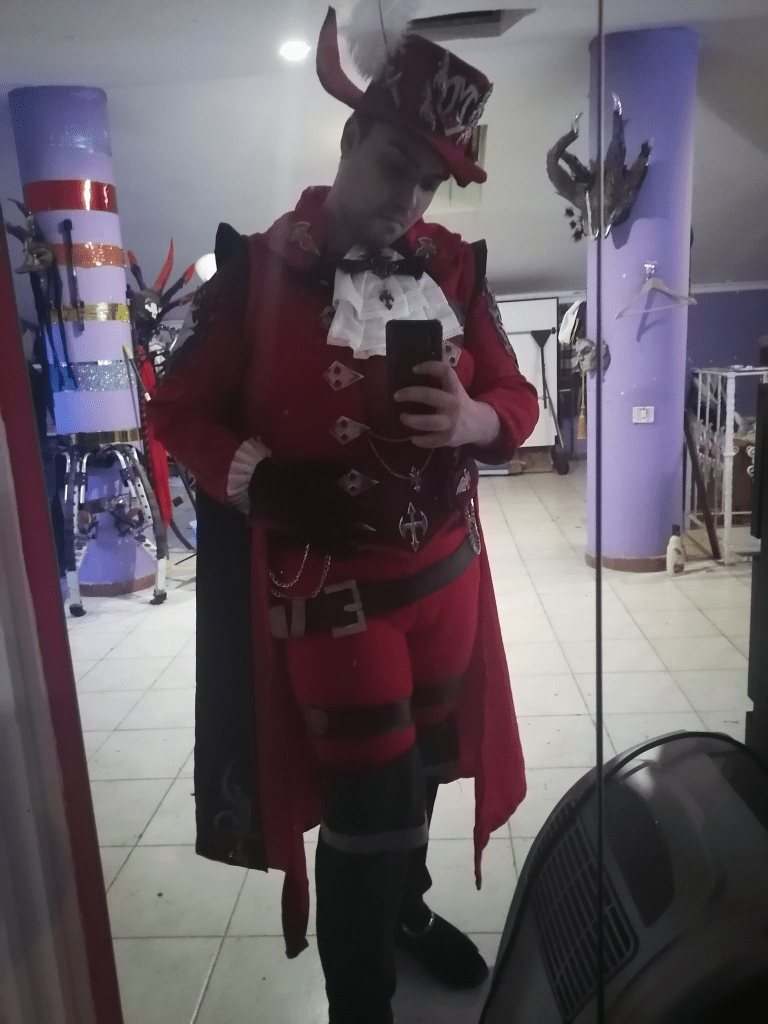
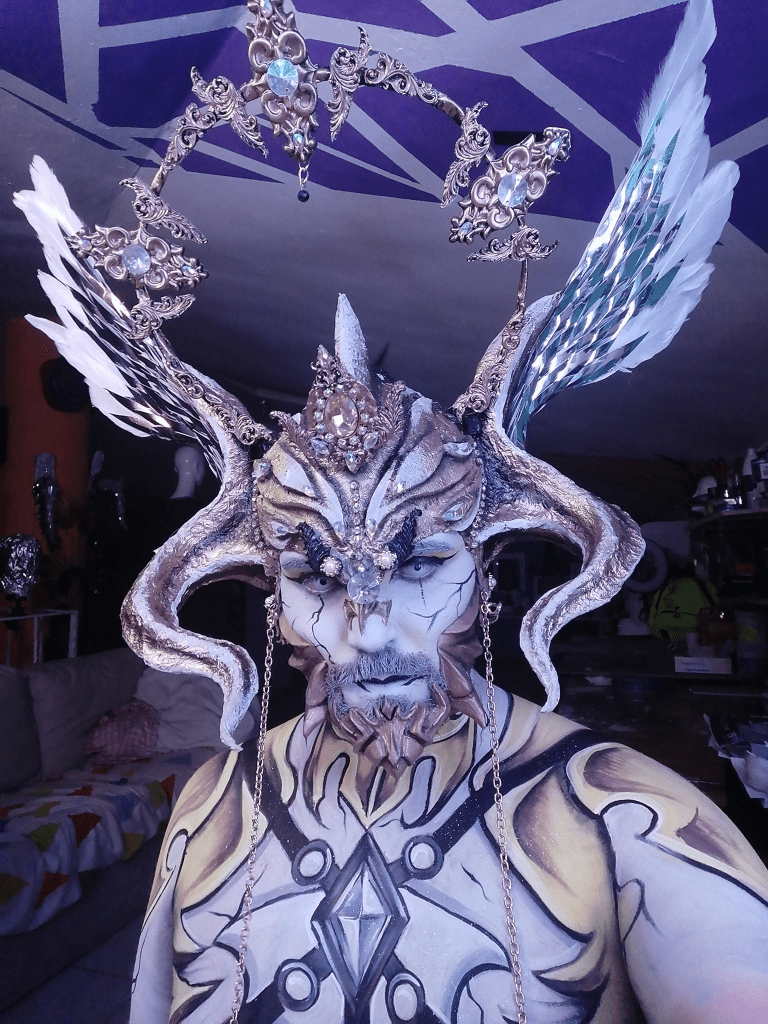
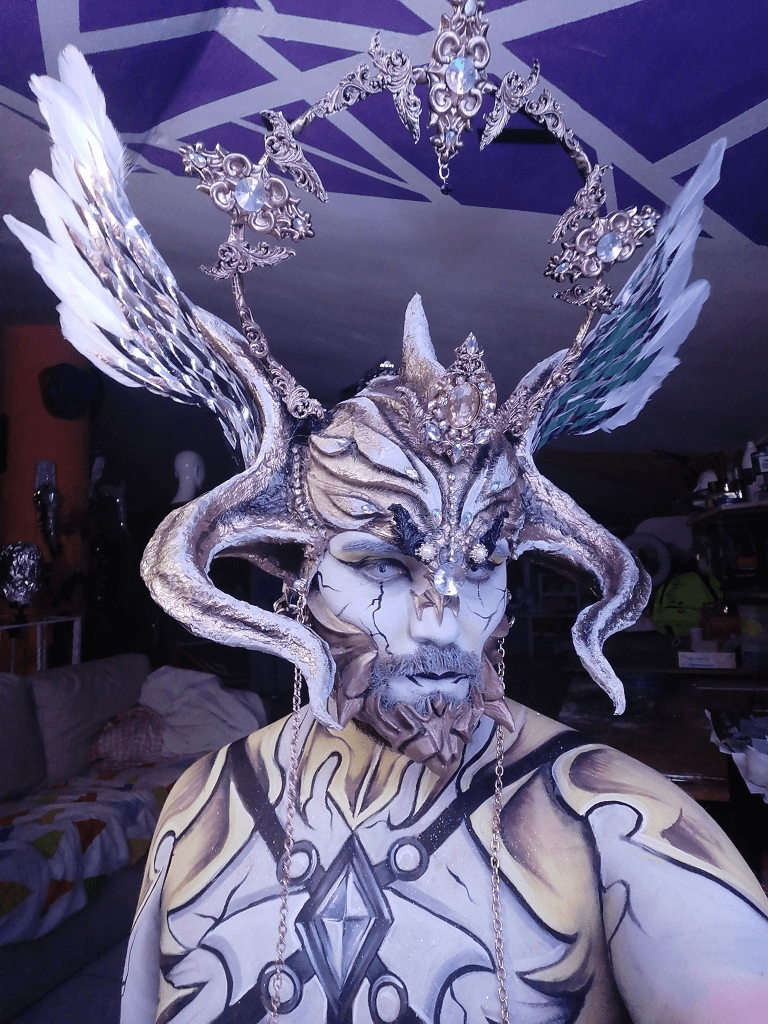
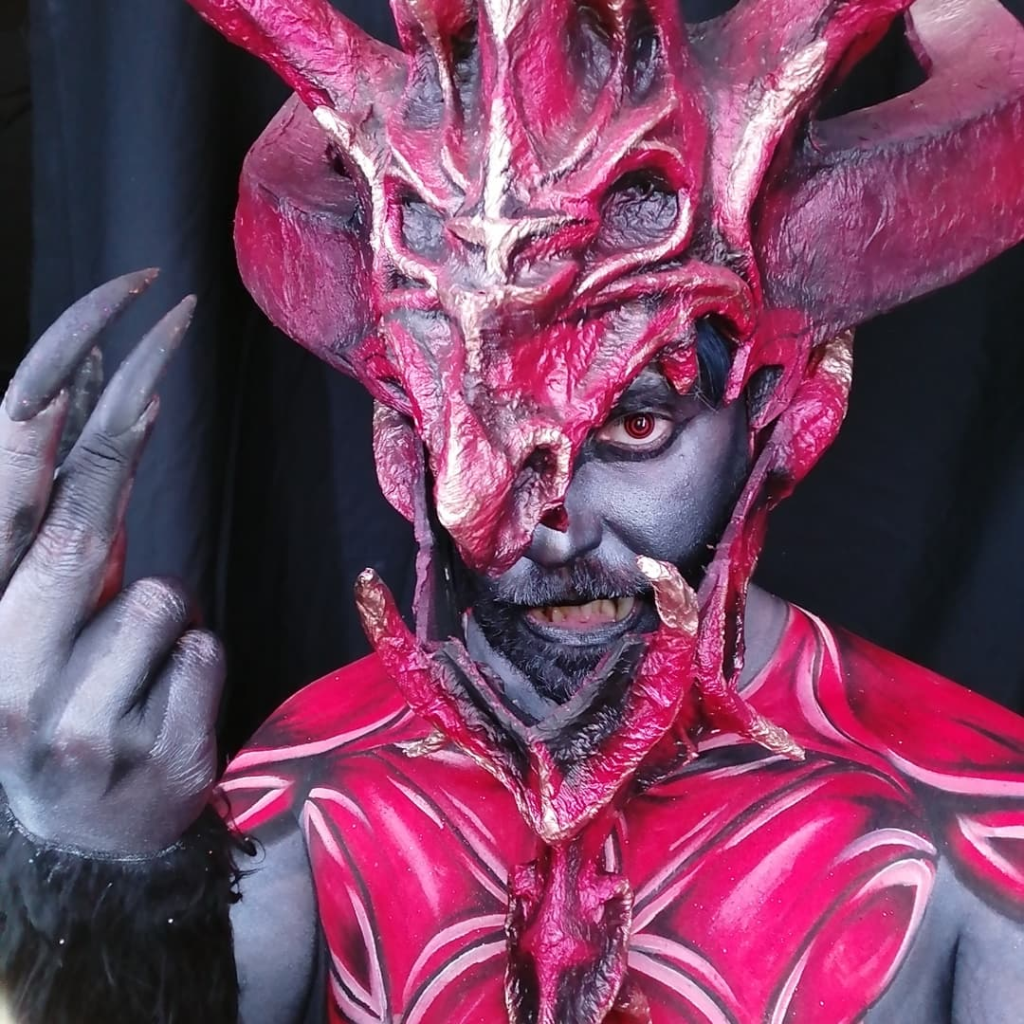
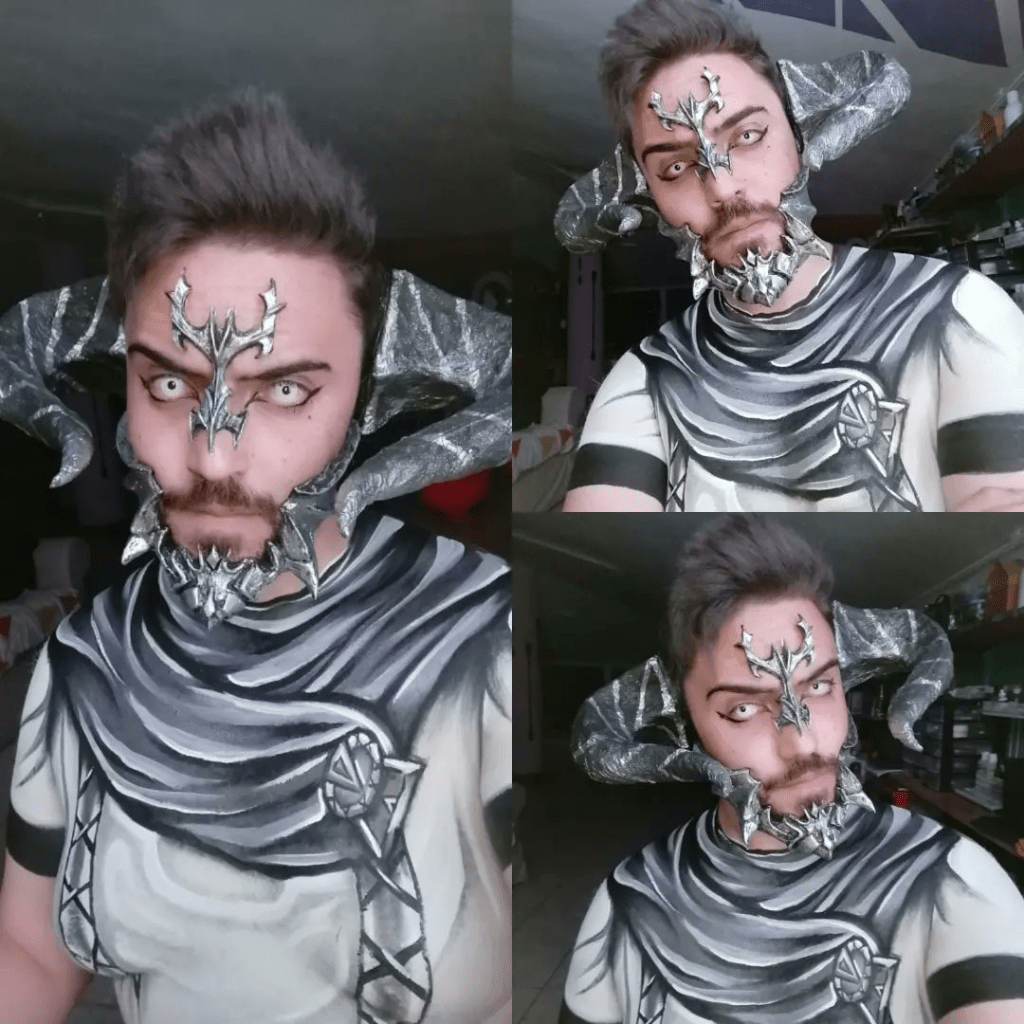
“Elegant yet deadly” is probably a great way to describe a lot of your body paint designs. My mind goes to your sin eater design in particular, which features a stunning headpiece as well as the makeup. Did that design challenge your SFX skills to achieve the final look, or had you built your skills to a point that you felt confident you could tackle something that complex?
Grievervsk: Yes, absolutely. At first I asked the artist which I followed a long time ago, @LoryDraws—which every design is mind blowing—if it was okay to try and make her character into body paint. Then I tried to make the headpiece as light as I could then just try to replicate her work on my body.
You mentioned becoming an instructor after you were encouraged to pursue teaching with your studies. Has teaching SFX changed how you approach your own work now, differently than when you were a student yourself? Have you gained any new perspectives or lessons through teaching the art?
Grievervsk: Yeah I gained a lot, actually. Being a close and shy person I always try to stand out of the crowd, but being a teacher and learning how to reach each and every student and inspire them to create and think outside the box makes me really proud. Perspectives change a lot; as a student you think that some tricks wouldn’t work, but as I grew to be a teacher I now use every single cheat my former teachers used.
For example, when sculpting prosthetics, play with different temperatures to achieve different effects. For making sharp shapes, for example, let’s say scales—it is best to work as cold as you can. That way the plaster that we use does not tend to misshape; the form retains better when working in the cold. The opposite is true, too; you can create smooth textures that are way better to fuse with the skin of the model, so it is better to work with hot temperatures when we need to fuse the appliance or prosthetic to the skin.
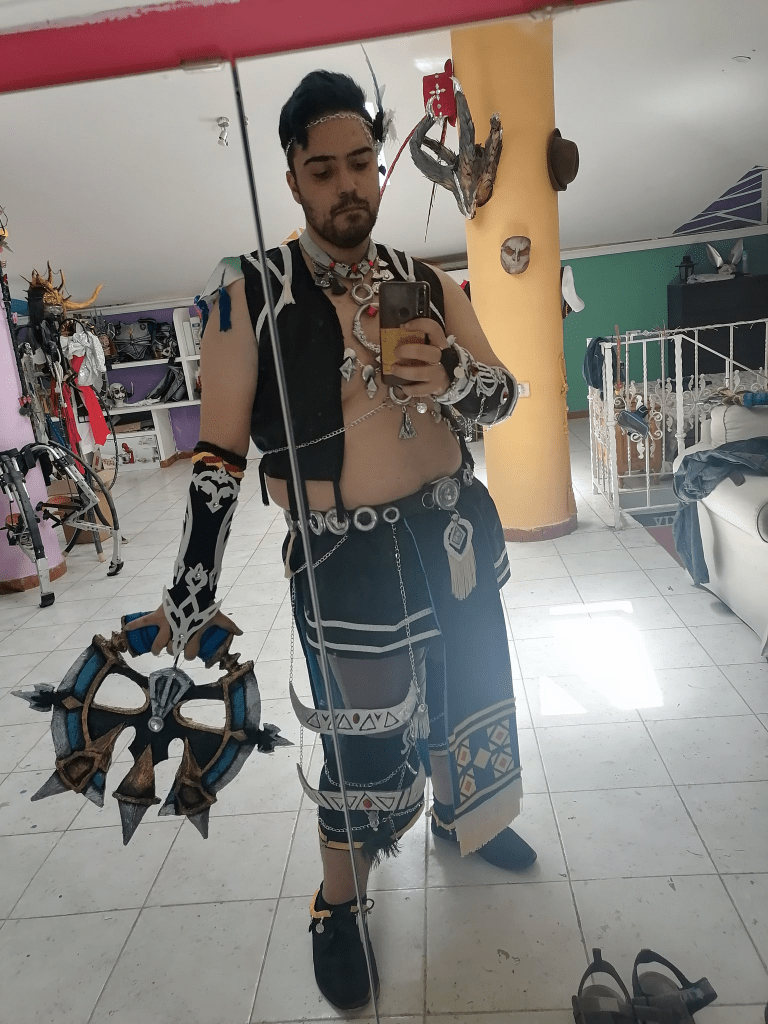
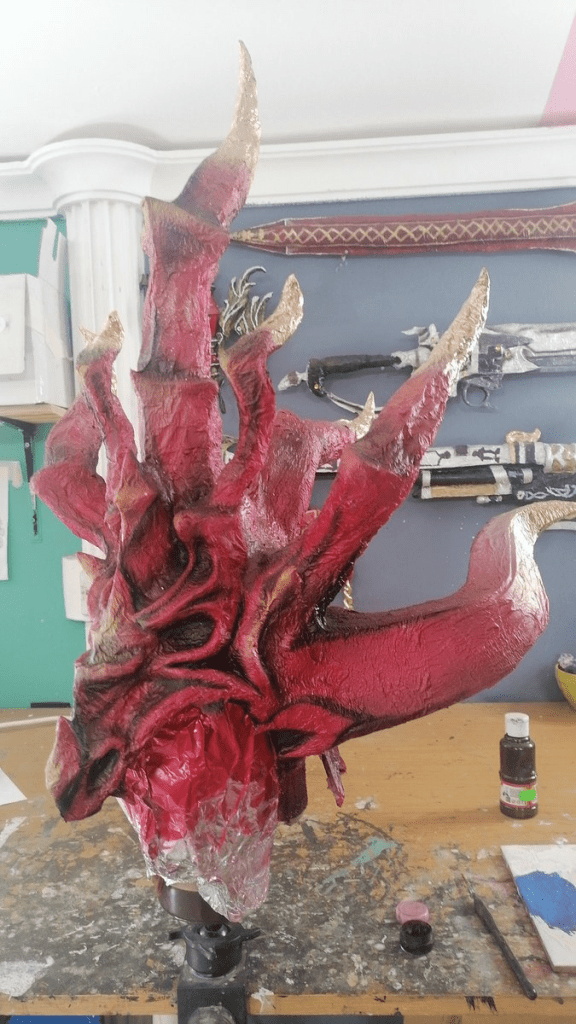
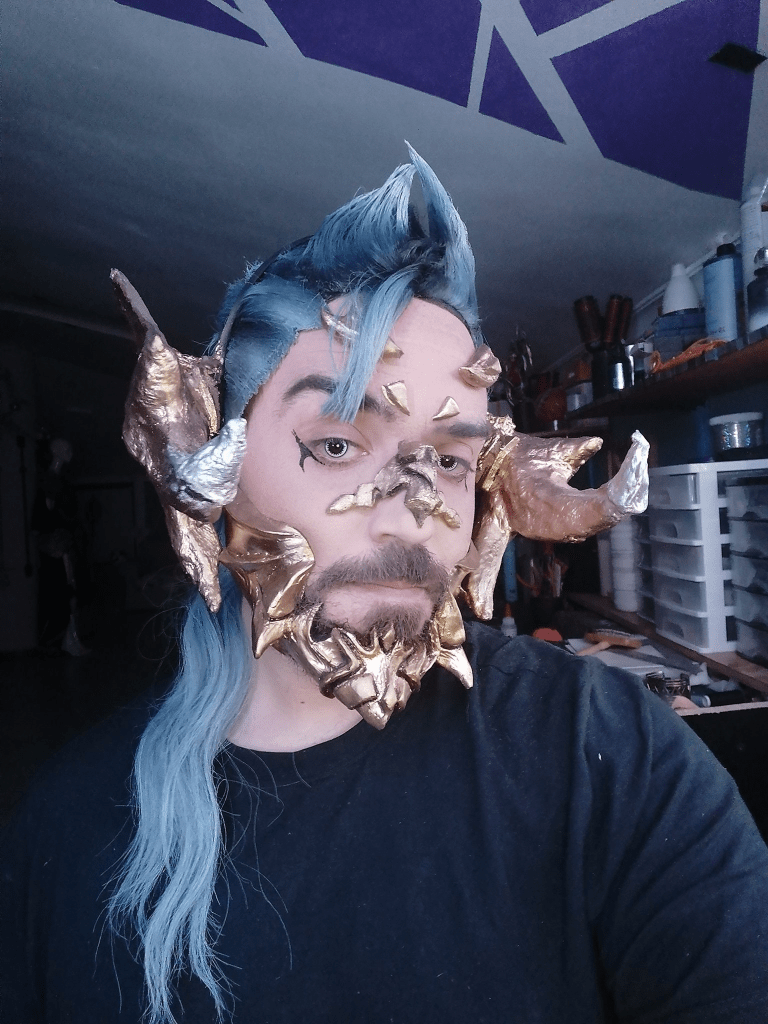
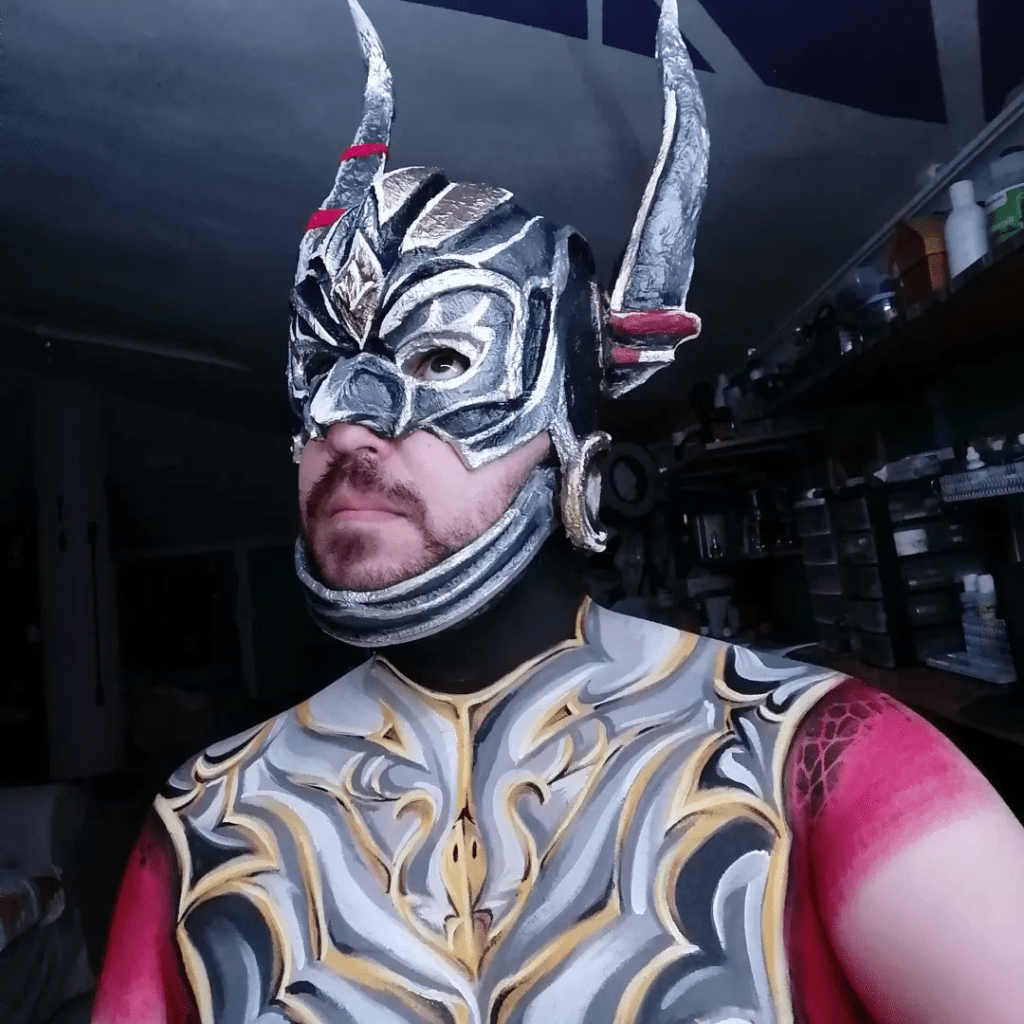
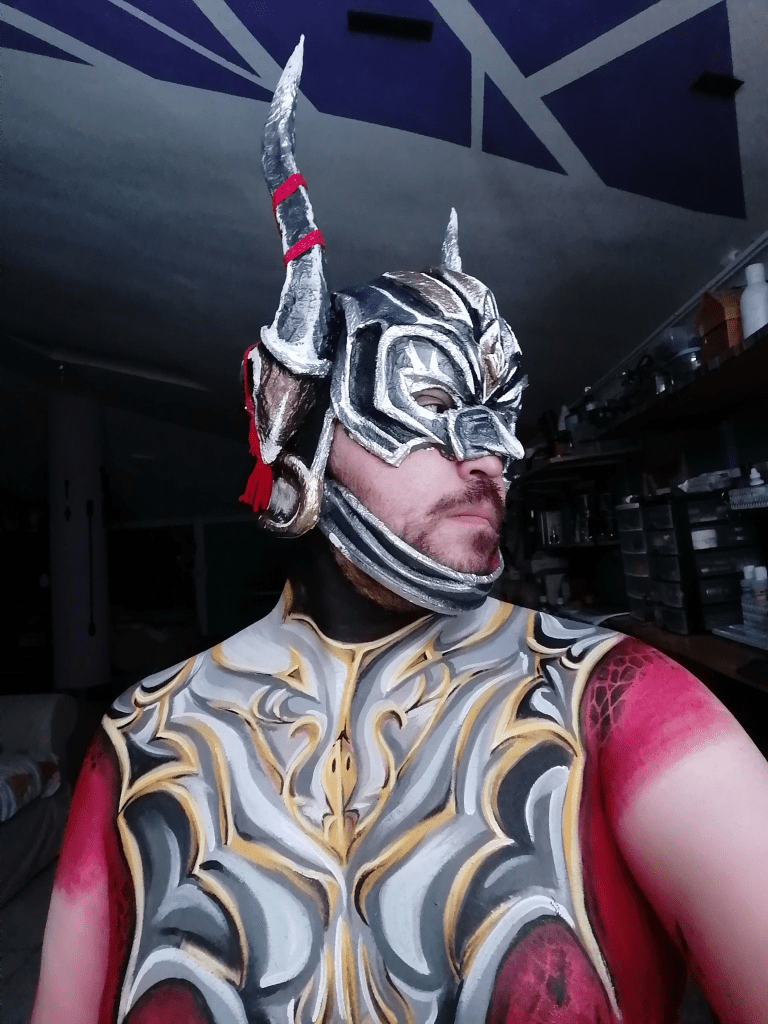
You finished a headpiece for a Zurvan cosplay you’re working on, an almost helmet-like mask that fits over your head. For a character like Zurvan, whose design is incredibly detailed with greater-than-life proportions, what is your process for breaking down the design you see in-game into a tangible design you can begin to build and wear?
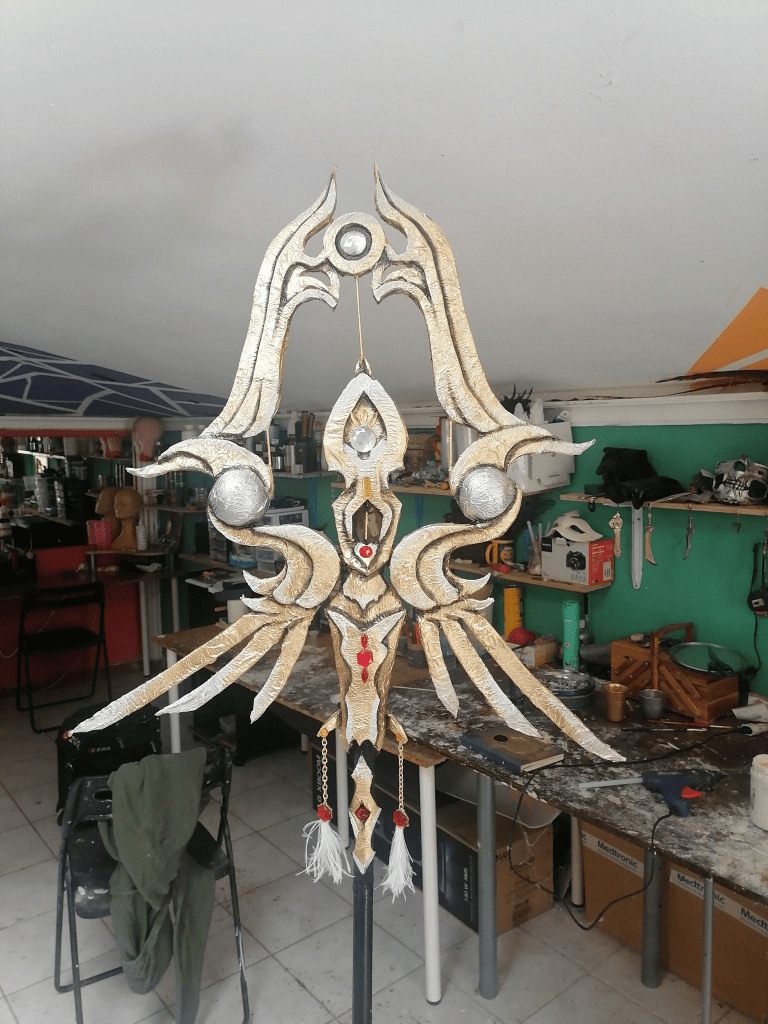
Grievervsk: It’s all about proportions and how to work with them. For example, reducing Zurvan to human size and then adjusting his armor (which yes, I intend to finish his weapon and wings) to how it would fit a normal human, but that’s the first step in playing with proportions. Then comes planning, pattern making, material sourcing and the process of making it.
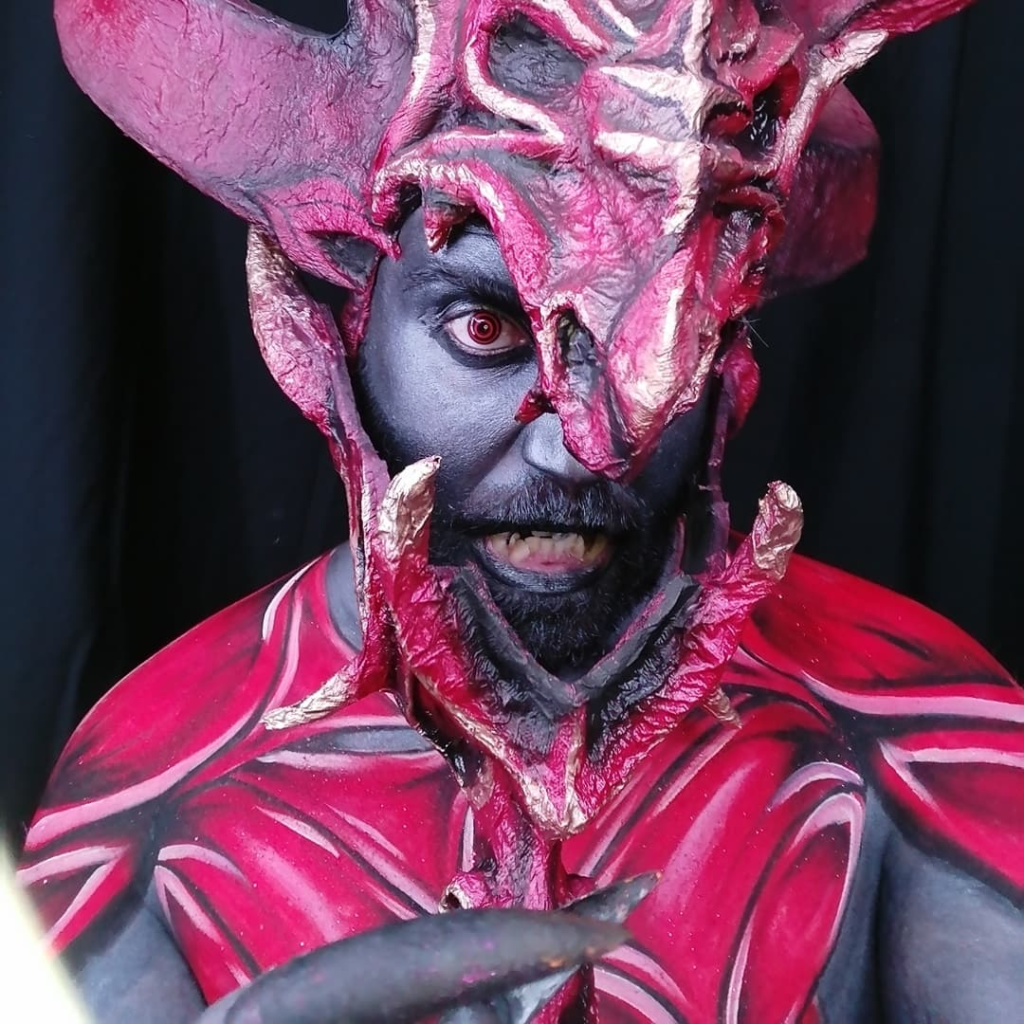
Do you have an extensive planning and design stage before you even touch materials to start crafting, or do you sometimes change or improve elements of the design as you’re creating the piece? Have you ever had to recreate something that didn’t come out quite as you wanted, having gained new knowledge from the creating process, or are you more of a “measure twice, cut once” kind of creator?
Grievervsk: I prefer to measure things twice and three times if possible; that way I learn new things while making them. Specifically living on an island here in Canarias, we don’t have many ways to get our materials like the famous EVA foam. I have been searching for three years now for a provider that actually ships to Canarias, as the tax thingy is horrible and they can’t afford to send cool materials to the islands, so that’s why when cosplaying here you have to be extremely careful of wasting materials.
When I interviewed Finalfantasymama, another XIV cosplayer, she also talked about the difficulty of obtaining supplies due to living in Suo-Oshima, a small island off the mainland of Japan. She mentioned how material limitations have taught her to be more resourceful and creative with things you wouldn’t normally consider using for cosplay. Have you found your own experience to be similar?
Grievervsk: Yeah, actually I use quite a lot of recycled stuff for my props, like old cardboard boxes, and the same with fabrics; I recycle a lot of old curtains, fabric pieces, and old clothes to give them new life as cosplays or various costumes.
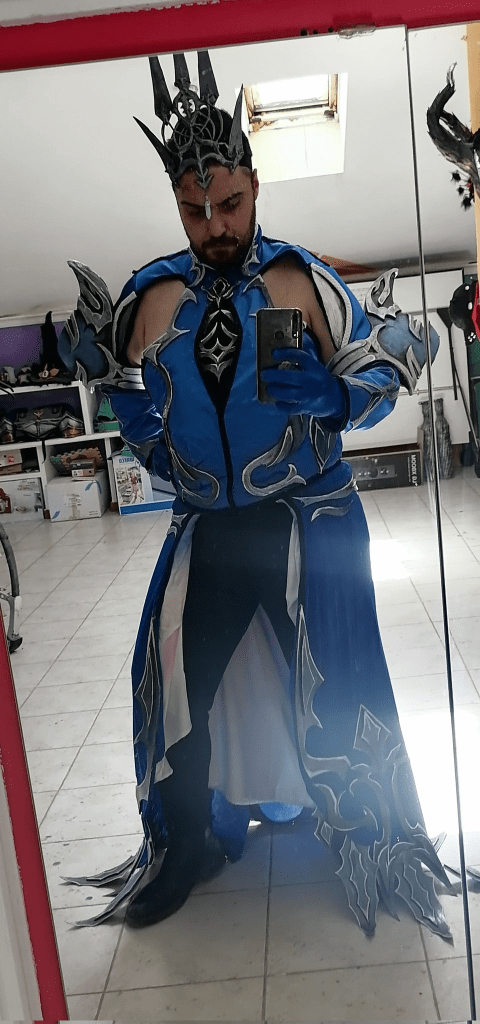
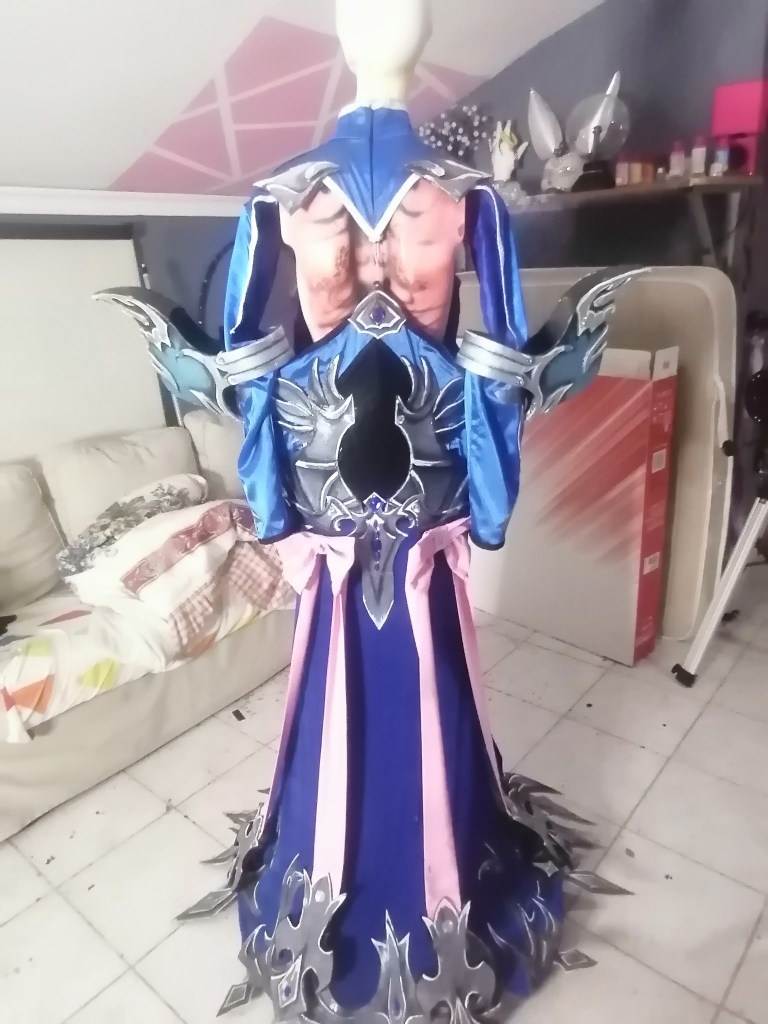
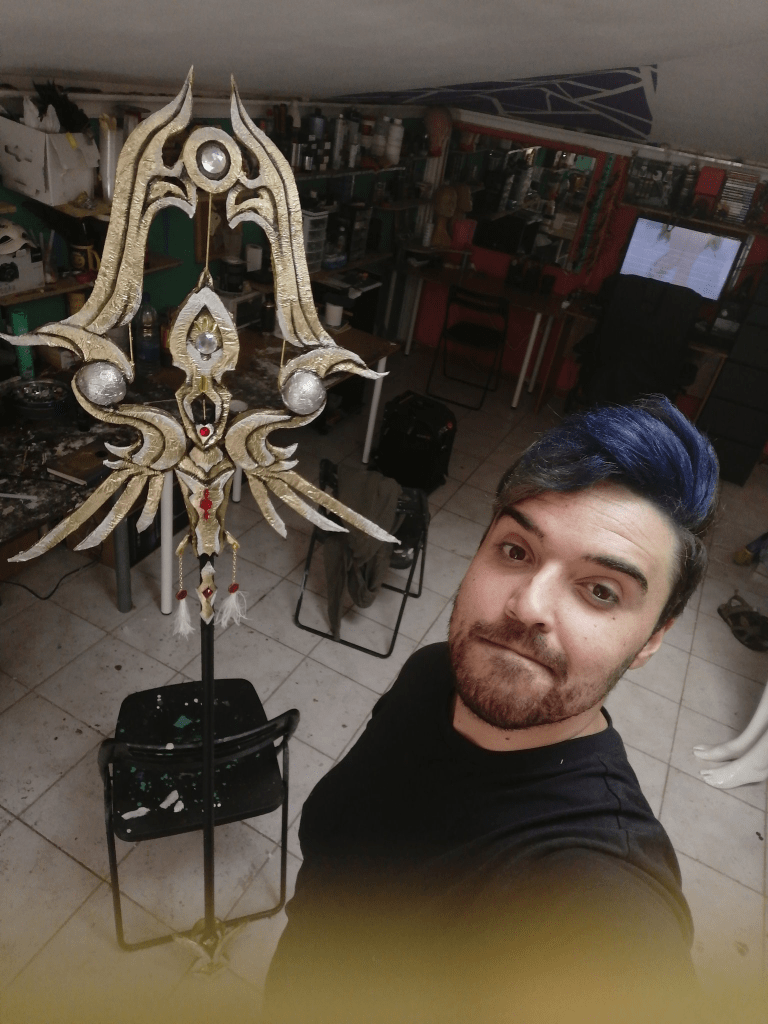
You mentioned working with various kinds of media as you were exploring SFX both on your own time and during your time at school. What role has sewing played in your creative career as a whole?
Grievervsk: Omg it was hugeeee. It changed the way I work, specifically in patience. Sure as an SFX artist you only get taught how to transform a face or a body, but learning how to work with fabric I was able to complete characters all by myself and not be dependent on other artists to complete a character that I want to bring to life exactly as I want.
You have created body paint projects both of your own original design and based on pre-existing designs. Even when referencing existing art, though, I imagine you have to make some informed and creative decisions in how to translate a digital, 2D design onto your own body in a physical, 3D space. Can you tell us about some of those challenges, and perhaps an example of when you had to come up with a creative solution to translating a 2D design into physical reality?
Grievervsk: It all comes with a little bit of imagination and perception of what I want to create, how I want to end the look, and how can I adapt the 2D character to my body in IRL; just pure imagination and perception of, “How can I do this amazing flipping art to self bodypaint (always asking for permission to the original artist), and how can I replicate it respecting every decision that the artist decided to make while creating their original piece?” For example, a while ago I asked @itsmeishmi for permission to make Ori Ishmi’s OC in the Bard art, which I translated to self bodypaint.
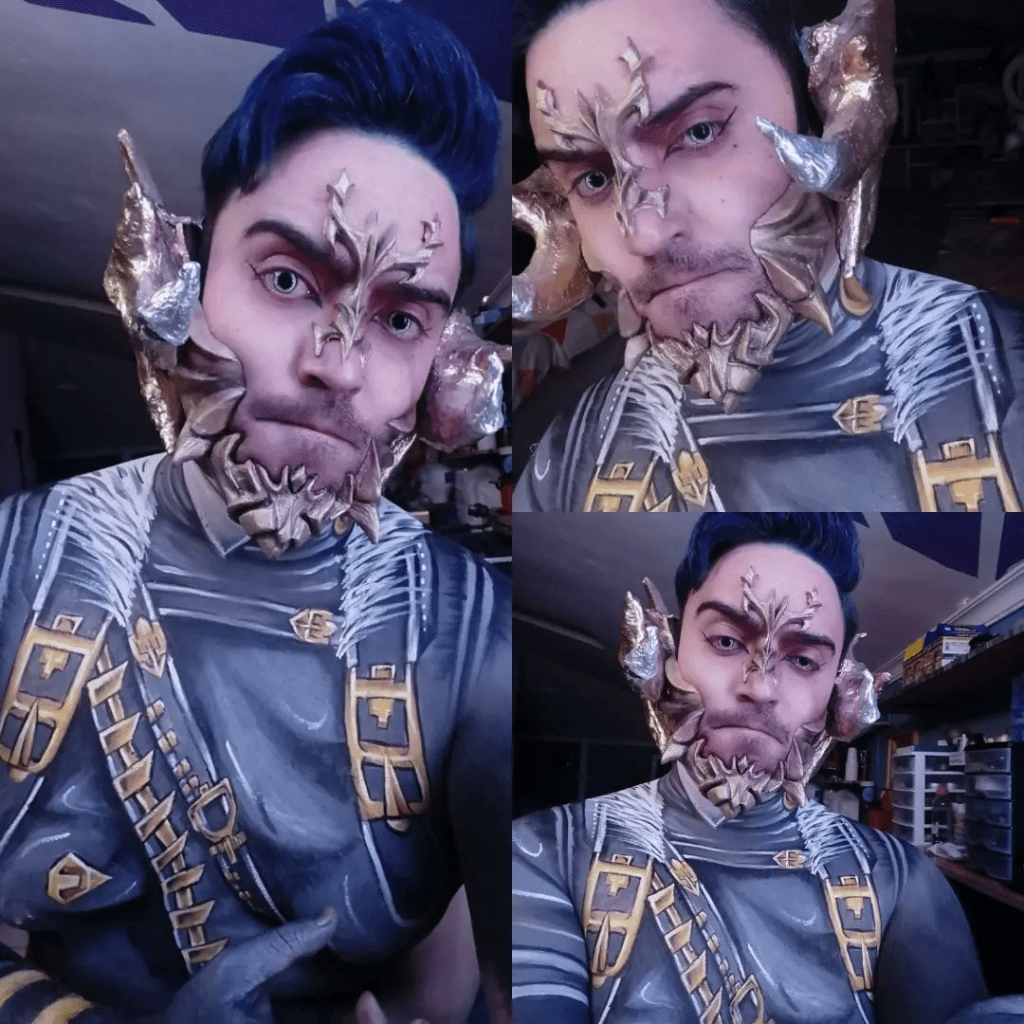

Your bodypainting cosplays, for example your Au Ra Machinist or your Meteion designs, are so intricate that it’s easy to forget that you have to paint that on yourself, by yourself. Your Meteion design in particular features her delicate and intricate brooch, and you detailed it perfectly. What are some of the unique challenges of doing full body paint cosplay vs. just facial SFX designs?
Grievervsk: I love how the Au Ra came out, but had a few Meteion challenges. Because I loved the character and design, the first and major challenge was “HOW CAN I BE BIRB MAGIC GIRL TOO,” capturing the change in her personality as we progress in the story and finding out how her tunic design works and how her brooch would react with IRL light and shadows. Although the dark side came out a bit more dark than I had anticipated.
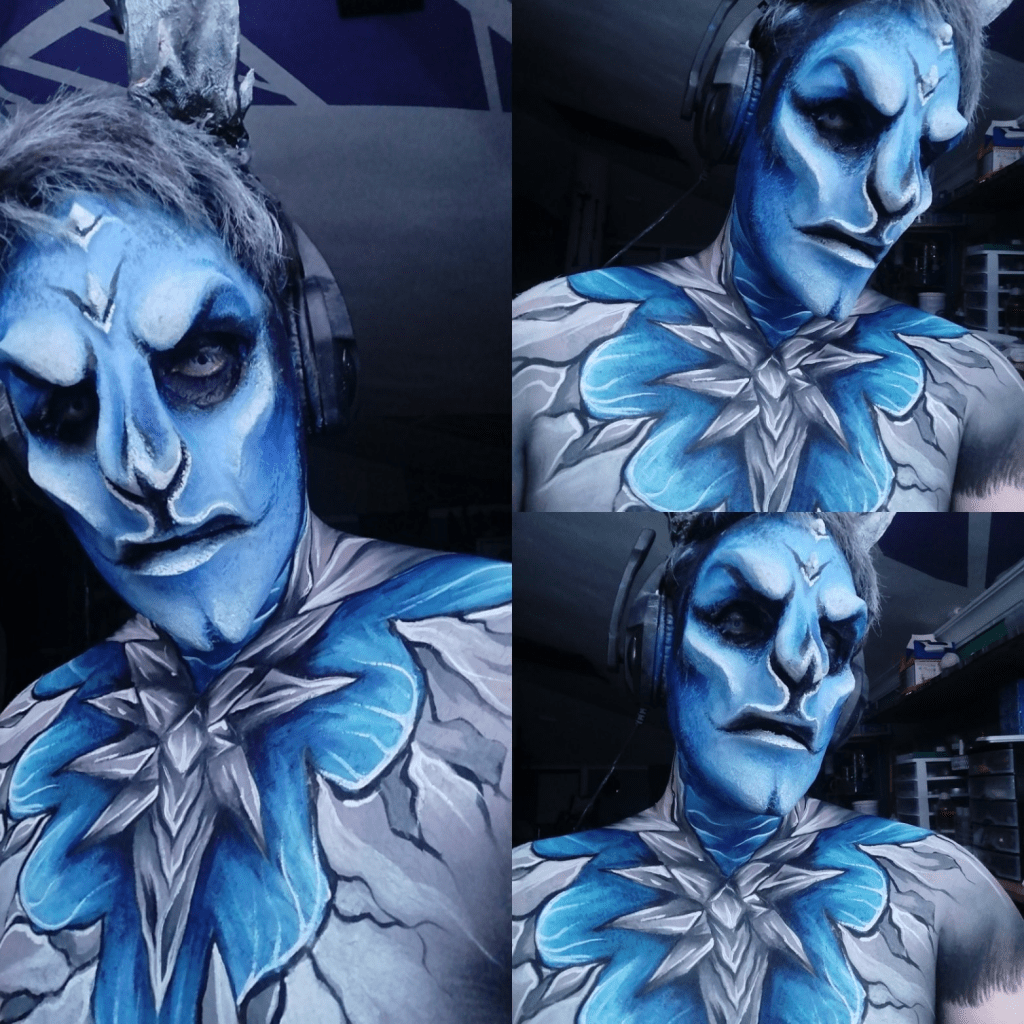
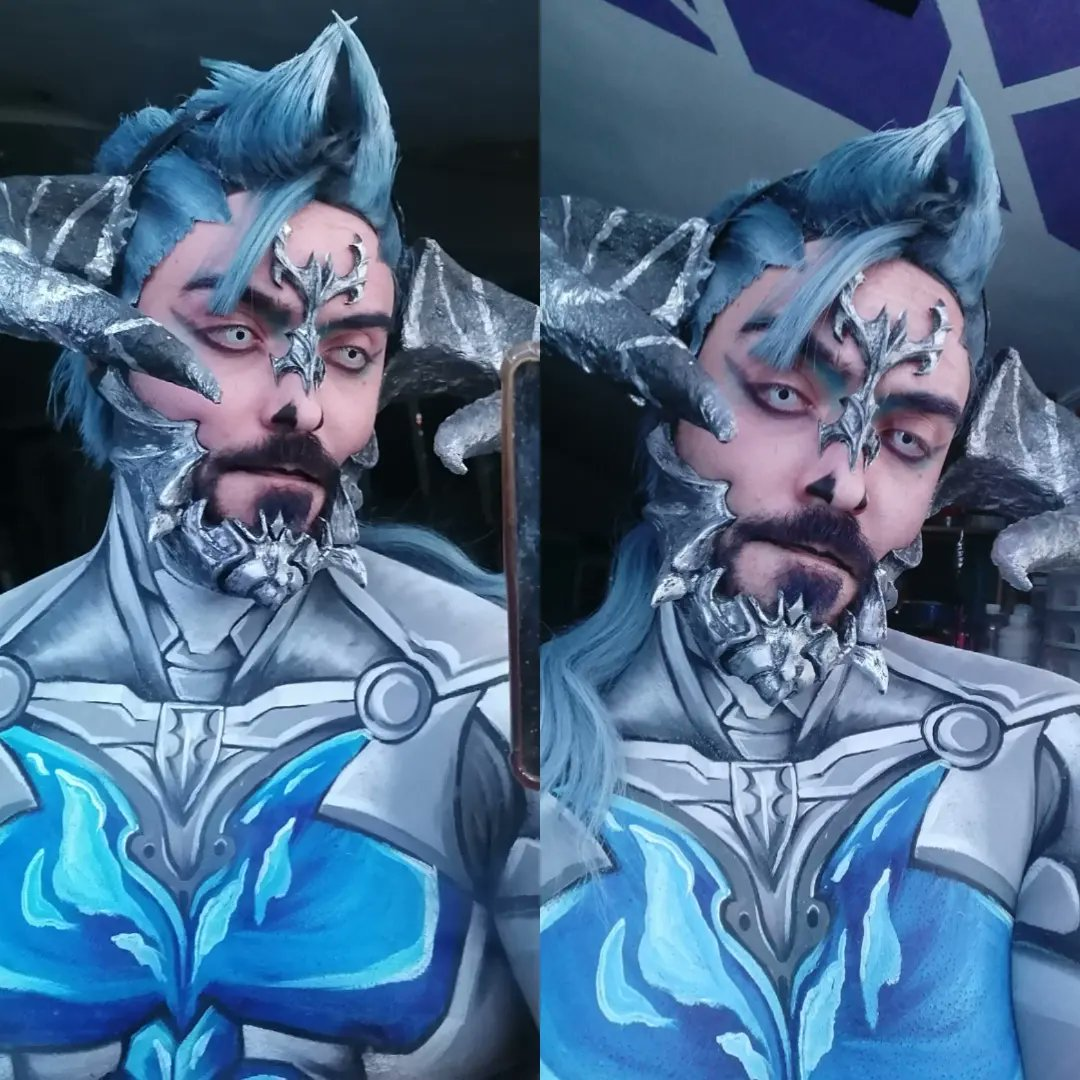
You definitely haven’t shied away from designs that call for an illusion of depth and shine since then, though, like your Ice Demon makeup that features a large ice crystal in the middle of your chest. Do you have a particular makeup design that you felt was a breakthrough or “level up” in your skill level of detail, polish, and difficulty?
Grievervsk: ABSOLUTELY! The one look that changed the game of how light and shadows work was the Lucifer look. That’s one of my favorites but learning how light and shadows work elevated the look to a new level.
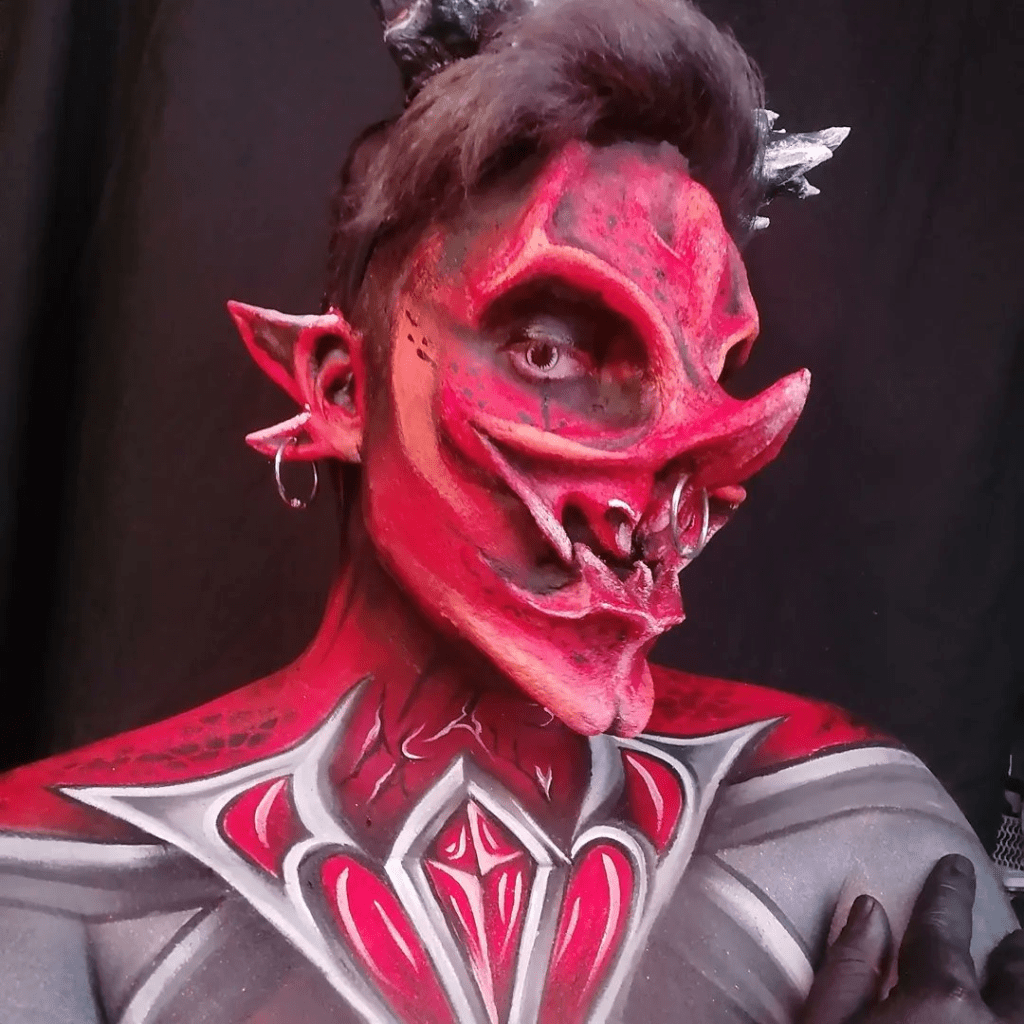
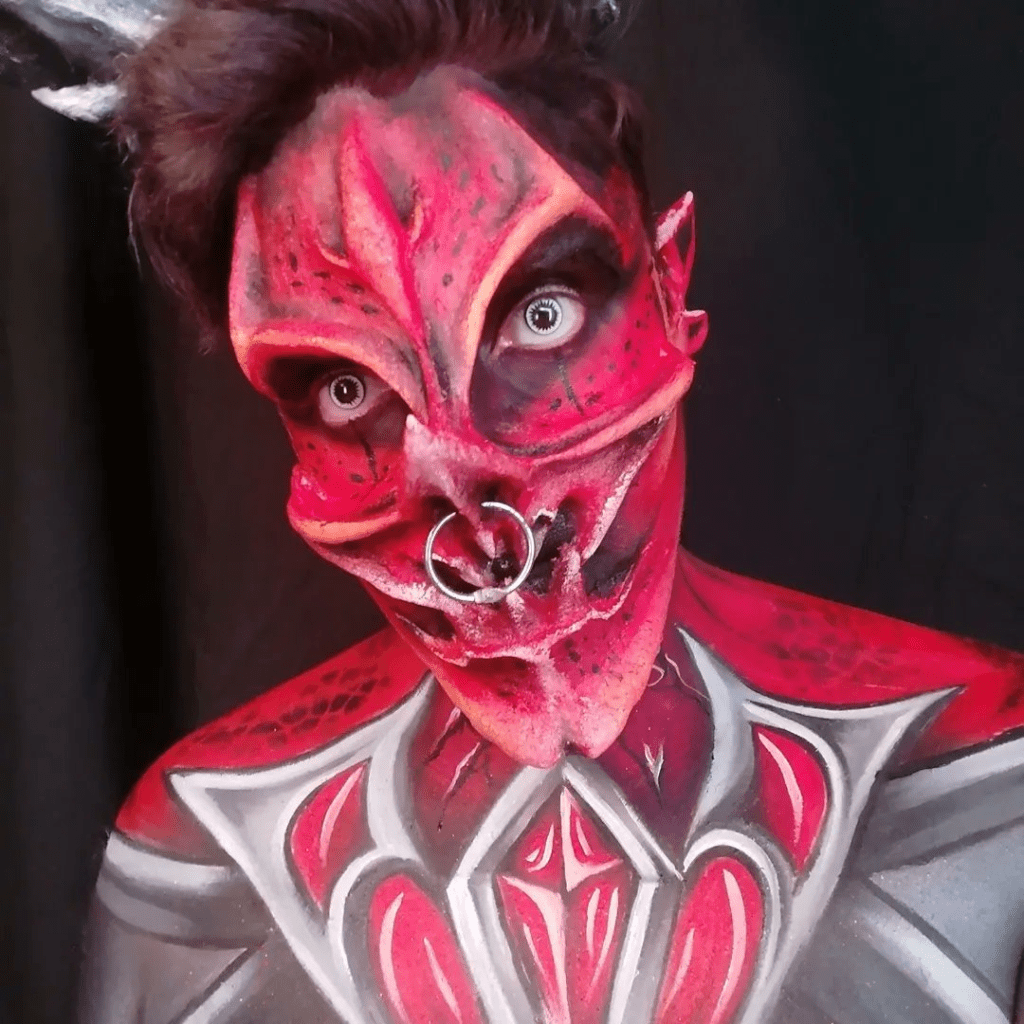
Do you see yourself ever returning to previous body paint looks you’ve done to see how you can improve or change them? Or do you prefer to take what you’ve learned from a finished design and keep moving forward onto a new project? If you’ve considered redoing any of your previous looks, which ones do you think you would try again, and what changes might you make?
Grievervsk: I always try to learn with every look I do, but yeah sometimes I want to come back to remake a look with new techniques that I have learnt. I recreated Zurvan after learning a few techniques in light reflection in armor, and his helmet, too.
As you continue to grow your skills in both costuming and makeup work, do you foresee yourself continuing to pursue your role as a teacher for sometime, or are you interested in breaking into other careers as a makeup artist?
Grievervsk: As for now I am comfortable being a teacher and inspiring new people to join this world, but in the future I would like to have my own studio where I can create cosplays and costumes for other people and keep working and playing with makeup, too.
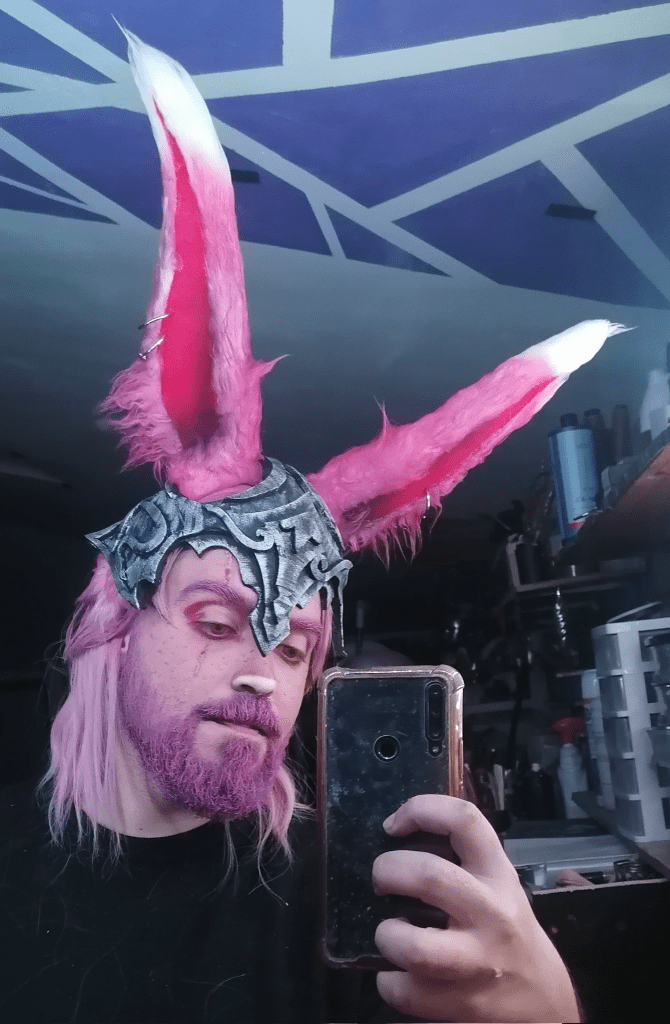
As you’ve focused on your artistic career over the last few years, you’ve learned (and are continuing to learn) an huge assortment of crafting techniques: hairdressing, sculpting, painting, makeup design, sewing, prop making, and now also resin casting and wig work. That’s a lot of skills over a relatively short amount of time when compared to cosplayers who have been creating for many years and have built their skills over that longer amount of time. As both a teacher and continuous student of art yourself, what advice, encouragement, or perspective can you offer other creators for learning new skills and techniques?
Grievervsk: Honestly, as my parents told me, everything begins ugly—then with time, patience, learning from mistakes, learning from other people, artists, art, never losing hope, don’t give in to your inner demons telling you that you aren’t worth it, your art isn’t worth it, etc., and many, many obstacles that appear along the way—then savor that amazing second when you [finish] cosplay/makeup/art/anything you create, because you are gonna like it and you are gonna want to savor it more. Growing in the arts, that’s how anything you create becomes beautifully made.
Do you have any future FFXIV cosplay or body paint plans, or what works in progress are you currently focusing on?
Grievervsk: Yes actually; I’m working secretly to make the Aglaia caster set for cosplay with the staff of the goddess. I’m sculpting new face Au Ra scales to cast in resin, too, and later this year I’m taking on wig work to make a few looks from the game. In the body paint section I would like to try to make the newest armor of Buried Memories. Apart from FFXIV, I’m going to make the Electrohammer boy from Genshin Impact that I liked.

Thank you so much for taking the time to tell us so much about your craft! Last but not least, tell us about your Warrior (or Warriors) of Light! What is your favorite way to spend time in Eorzea?
Grievervsk: Well, I have three WoLs! The oldest, Eltheon, [is an] Au Ra Raen—my gay chaotic bby boy likes having fun in dungeons and MSQ. The middle child, Aesir, [an] Au ra Xaela—he’s really chill and loves raids and loves to hang out with the FC friends. And the smol bun boy Brinhildr, who is doing MSQ to reach his brothers and making new friends!
You can find Grievervsk (and more of his stunning work) on his Twitter and Instagram!
 Inquiries of Art
Leave a comment