
Even with careful consideration of their resources and schedules, constructing a finished pattern requires the ability to adapt and be flexible, as Crow Dalova pointed out in his interview. Unforeseen issues are inevitable when construction finally begins—which in an outfit as “forgiving” as robes, Crow observed, allows “a place for people to really let their foundational skills shine.” For Crow, the hems and seams of a costume are the ideal place to add subtle detailing. Decorative stitching along the hems “or using seams outside the standard straight ⅝” seam such as a French or flat-felled” can be added flare to polishing the finish of a cosplay, but sometimes an answer can be as simple as using the best tool for the job, no matter how basic.
During Malindachan’s own sewing process, she noted that her fabric significantly thickened when sewn together, throwing a wrench into her initial plan to “gather the capelet, sew it directly to the robe, then fold down and topstitch.” Instead, she “ended up sealing the raw gathered edges with a bias tape/blanket binding and hand-tacked it to the robe.” The numerous layers created from sewing the capelet and robe together with the edge folded under to seal the fabric ends would have proven difficult to sew by hand or machine, but by sealing the edges with bias tape—a thin weave that can be sewn onto fabric to smooth its edges and prevent fraying—the capelet could be more easily attached to the body of the robe. Typical bias binding is cut along the edge of the fabric, allowing it more stretch and movement. Blanket (also known as quilt) binding is used when strength is desired over movement due to its solidly horizontal and vertical weave, making it ideal for adding shape and stability to Malinda’s sophist robes.
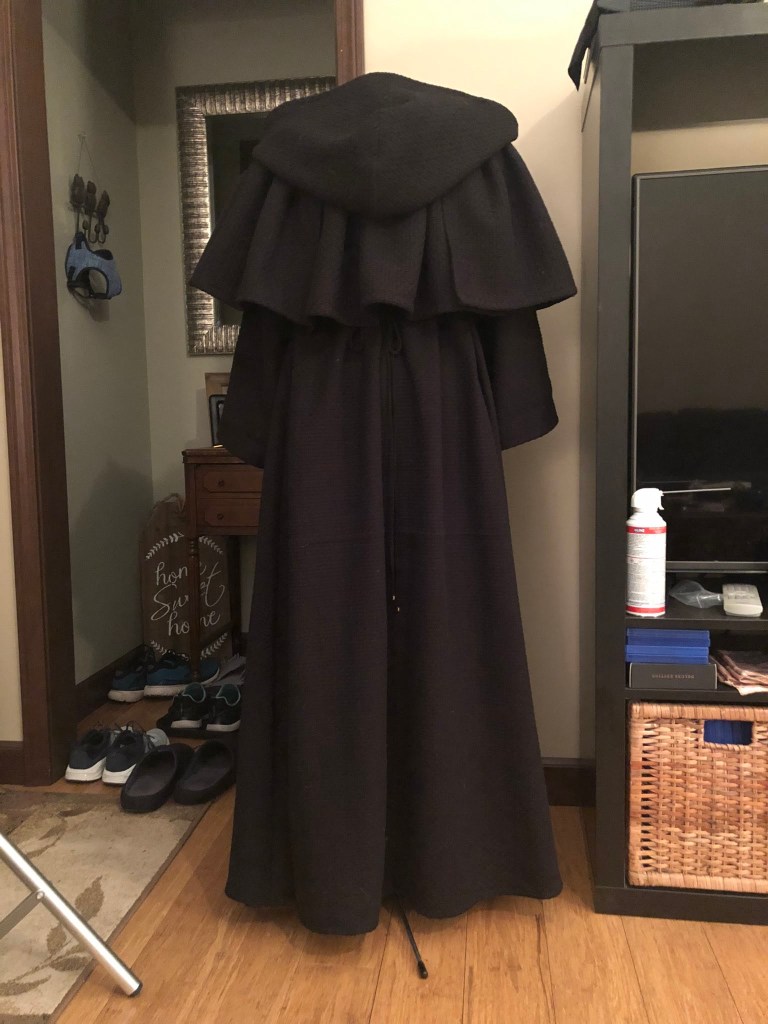

Cosplay: Malindachan
Much like the hood, the embroidered front panels of the robes required some consideration for their construction, in particular due to adapting their in-game proportions to more realistic sizing, and the XIV cosplayers brainstormed no shortage of methods for recreating the design. Wifeintheattic’s “initial draft had no space for the soutache design,” forcing her to drop the waistline to accommodate the panels. Joyce ran into similar sizing issues when she also noticed that “the embroidery panels [looked] so small on the in-game models” when compared to the character models’ longer torsos. Rather than dropping the waistline, however, Joyce took advantage of the panels by lifting “the waist hem up two inches from the natural waist to create a nice flow and cover the seam separating the top from the bottom with the embroidery.” She took “inspiration from choir robes” to visualize the adapted proportions from in-game to real life, and was pleased with the billowing flow of the robes in the final pattern that could be easily adapted to any body type.
Though perhaps less traditional, Kappakay was no less creative in his approach to the embroidery panels. Without access to an embroidery machine, Kappakay also opted for soutache trim for the main parts of the intricate detailing, but was ultimately unable to find the tassels he wanted for the cords on either side of the panels. Instead, Kappa created what he needed from “brushed out yarn, spray painted rope, and foam clay.” Soutache, a flat-laying, decorative braid typically used in embroidery and decorative designs since the 15th century, was a sensible choice for cosplayers like Wifeintheattic and Kappa, but it was not the only approach cosplayers took for the robes’ decorative panels. Em “briefly [considered] using soutache or cording . . . but eventually decided that flat machine embroidery was going to be cleaner and more easily recreatable.”


Photographer: Ex-Shadow
Mask: Cobheran & isomoART
For other creators, love of the embroidery crafting process itself held just as much weight as its practicality. OiNoya—a self-proclaimed “HUGE embroidery fan” with almost ten years of professional experience in the field—echoed the same excitement. The embroidery had sparked her initial interest in creating the robes, as she “had never tried to create a rope embroidery before” and “just had to give it a try to add it to [her] repertoire!” Joyce embraced her first foray into digitizing embroidery designs, excited for the opportunity to learn a new costuming skill, and Malindachan also pointed towards her personally digitized design as an important aspect of her personal creativity in the outfit. And with so many creators approaching the final details of the sophist robes with as much variety of skills as their fabric choices, the sharing of resources became even more prevalent throughout the community.
Cosplay is a constant balance of time and resources, and skill sharing between creators plays an important role in the modern cosplay community. Once she had settled on machine embroidery for her panels, Em looked to resources offered by other cosplayers rather than starting from scratch, and ended up purchasing the embroidery files from EmissaryOfWind; Maru, likewise, reached out to fellow cosplayer Ultima (aka Carina) for her embroidery files to use with her Cricut. For creators focused on other aspects of a costume, or finding themselves under a time crunch, even shared insights can be a lifesaver.

Photographer: wheres_devin
Mask: Cobheran & isomoART
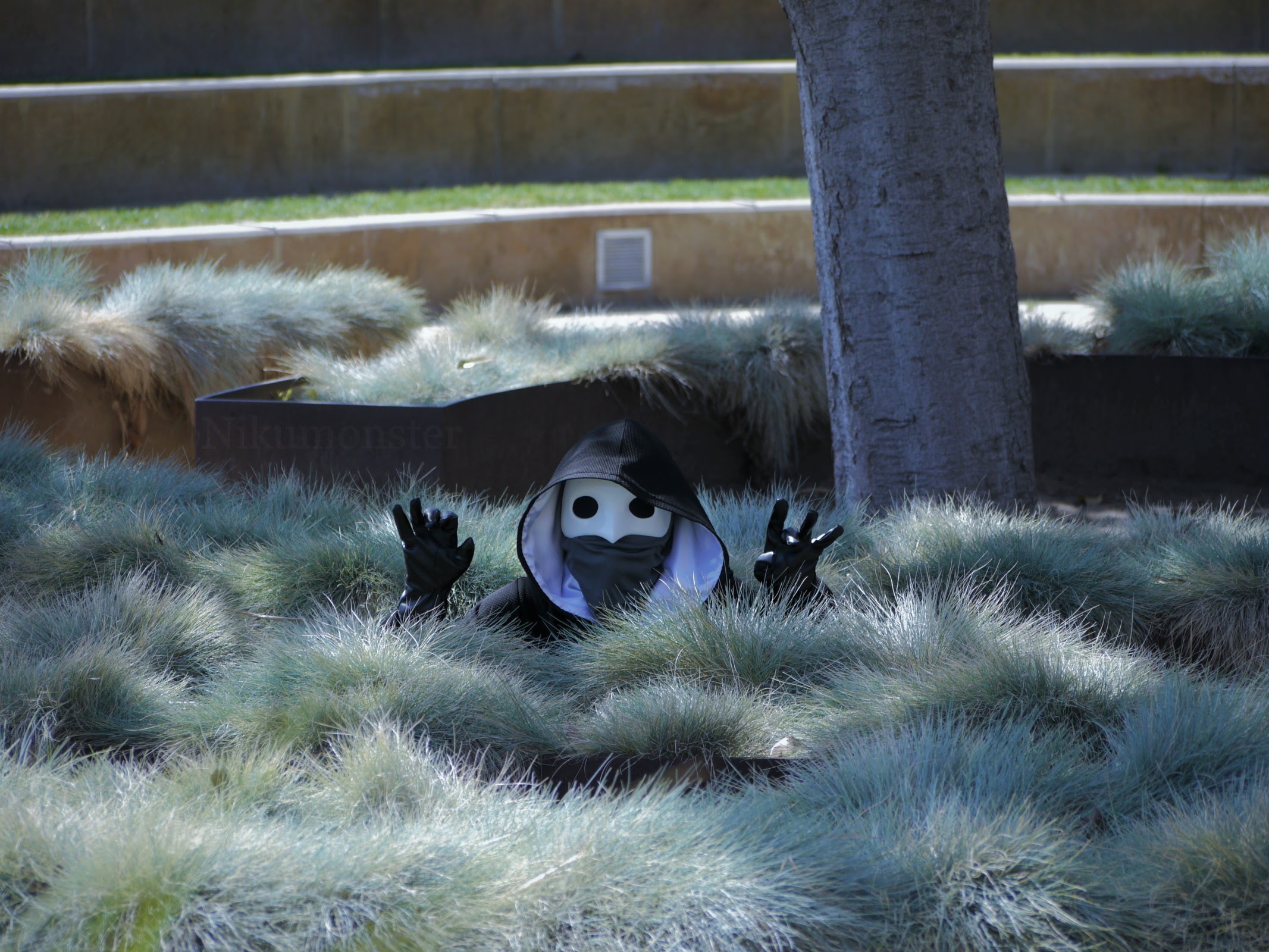
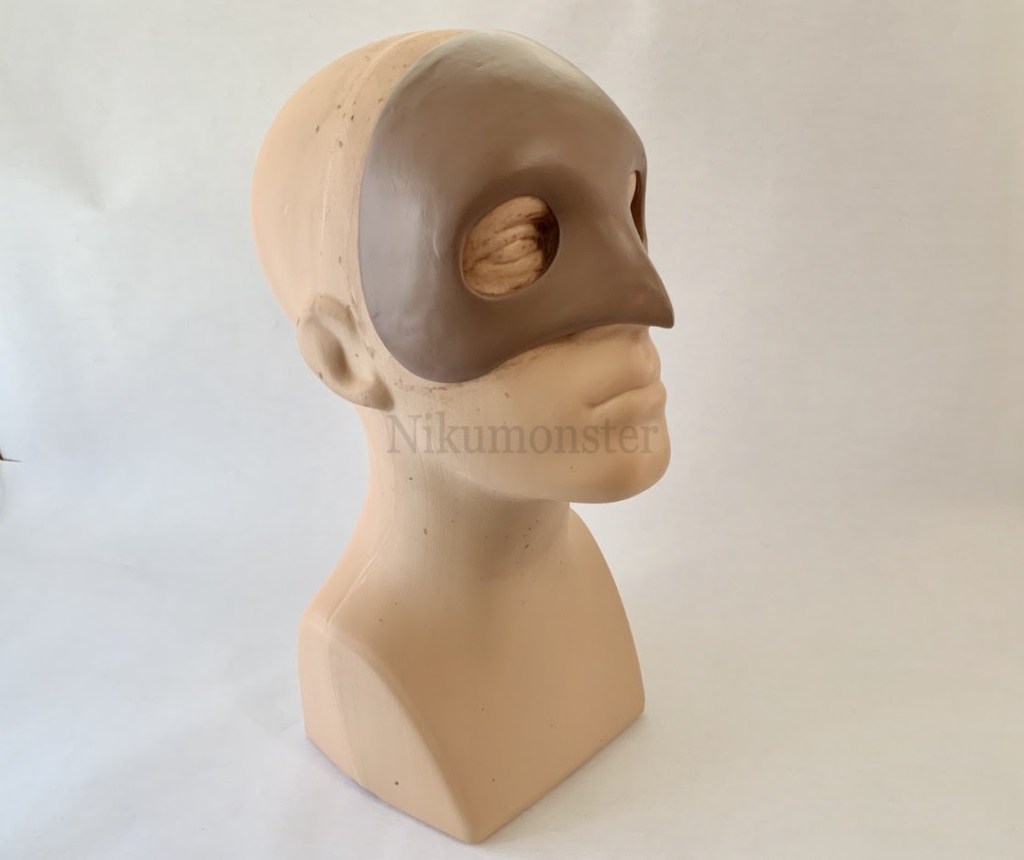
Naaru—who, like Kappa, did not have access to an embroidery machine to recreate the panels—found that even researching other cosplayer’s techniques for rendering the design, rather than referencing in-game screenshots without any guidance, was a huge time-saver. Valuing a work smarter, not harder approach, she also looked “to see how people made some of the details” of the mask that adorns the front of the robes. 3D printing quickly became the most common method for recreating the iconic mask, as other techniques were unlikely to equally deliver on both ease and quality. Niku found out the hard way when she first created her mask first “out of Monster Clay,” which was then “molded… with Smooth-On Rebound 25 silicone and cast… in Smooth-On SmoothCast 65D resin,” only to become dissatisfied with the unevenness of the finished product. She then turned to modeling the mask in Blender instead, preferring the improved quality control of the finished piece as a 3D printed product. As the capabilities of 3D printing have grown since its early inception in creative communities, so too have resources that have widely increased its accessibility. Malindachan, Em, and OiNoya purchased the 3D model of the sophist robe mask from isomoART, with Malinda and Em then also reaching out to cosplayer Cobheran for the model’s printing. Kappakay and Maru sourced their mask models from The Dangerous Ladies, a creative collective who, alongside the expanding resources of 3D printing, specialize in developing props (as well as textiles) for cosplayers throughout a wide variety of fandoms. CrowDalova pointed out in their article, “I have no qualms about purchasing things outside my skillset, even if I end up finishing parts myself to add my own touches.” Sharing skills and resources can save cosplayers from wasting unnecessary time and frustration on their projects, and has the added bonus of supporting their fellow creators and small independent businesses.
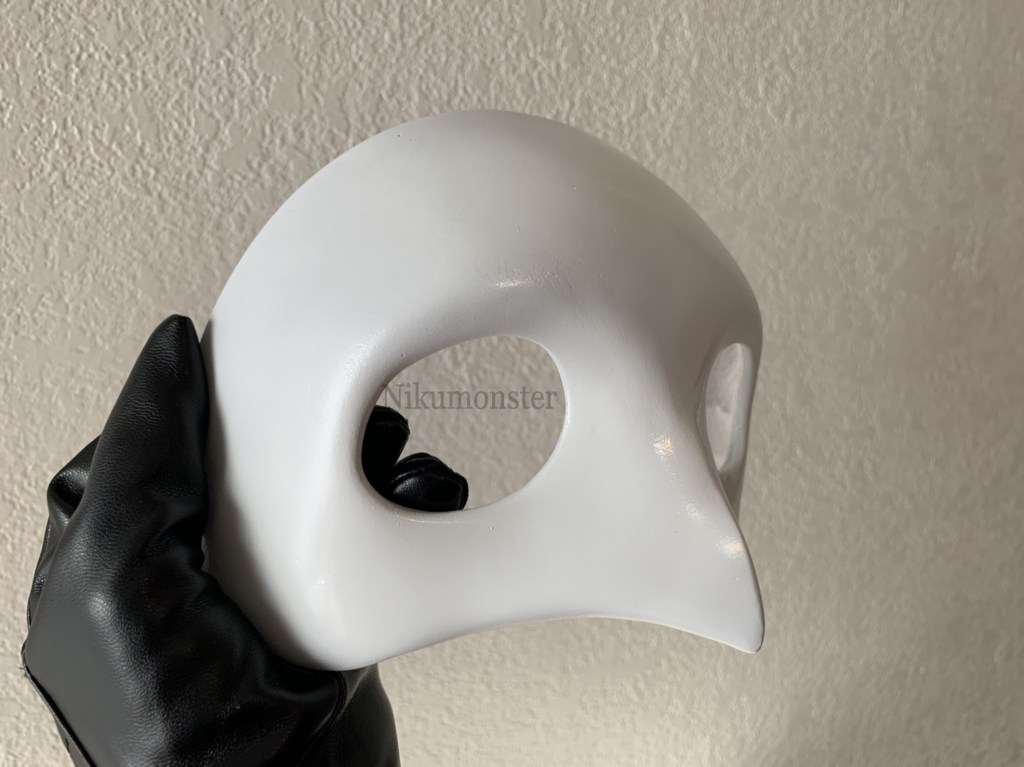
With the robe sewn and the pieces assembled, the final touch was to attach the mask to the front of the robes. Given that the mask appears to magically float in-game, with no clues to its true attachment, cosplayers had a wide range from which to select their preferred method—with varying degrees of complexity and finesse. Crow believed that the elastic thread would serve his needs sufficiently, being “light enough and transparent enough that the mask may be able to hang without visible attachments.” Maru opted to simply affix the mask straight to the curtain ties, which could be slipped over her head at ease. Cosplayers wanting to preserve the look of the mask attached to the robe’s cording without committing to permanently joining the two pieces—in OiNoya’s words, “that recurring gravity defying theme” so common in FFXIV outfits—had to research other methods. Wifeintheattic opted to insert neodymium magnets directly into the twisted upholstery cord itself. As the strongest permanent magnets commercially available to the public, neodymium magnets, also known as “rare-earth magnets,” are highly useful for cosplays with pieces requiring strong fixture.
Joyce pointed out in her interview that the use of magnets within the robe’s tassels also allowed for the type of mask to be switched out at will, allowing one robe to be used for various characters. Once attachments were affixed, those who wanted the option of wearing the mask faced another challenge entirely. OiNoya opted for carving holes in the sides of her mask to insert an elastic band, but Kappa went in another direction entirely. For both his sophist and Emet-Selch masks, “kid’s sunglasses” were attached “to the inside of the masks via earth magnets,” with additional strength being added to Emet’s with “twist ties to accommodate” the heaviness of the mask. Cosplayers who constructed their masks from lightweight materials were able to opt for simpler and more easily accessible options. By creating her mask with resin, Em could attach “sanded down brass tab fasteners,” which are found in “any store that sells office supplies,” to the edges of the mask with superglue. The glued-on fasteners provided a firm attachment that could “just wrap around the tassels . . . and stay in place perfectly,” so that even “hiking up a mountain for a photoshoot” did not budge the mask at all. And if brass fasteners weren’t simple enough, Naaru’s use of EVA foam allowed for securing the mask to the tassels with mere safety pins, which served her purposes just fine and, as she herself jokes, was “absolutely disrespectful.” Most cosplayers, though, would argue that a job finished and done is always good enough, “disrespectful” or otherwise, as the polish of the finished product is still ultimately second to the pride and fun of wearing it.
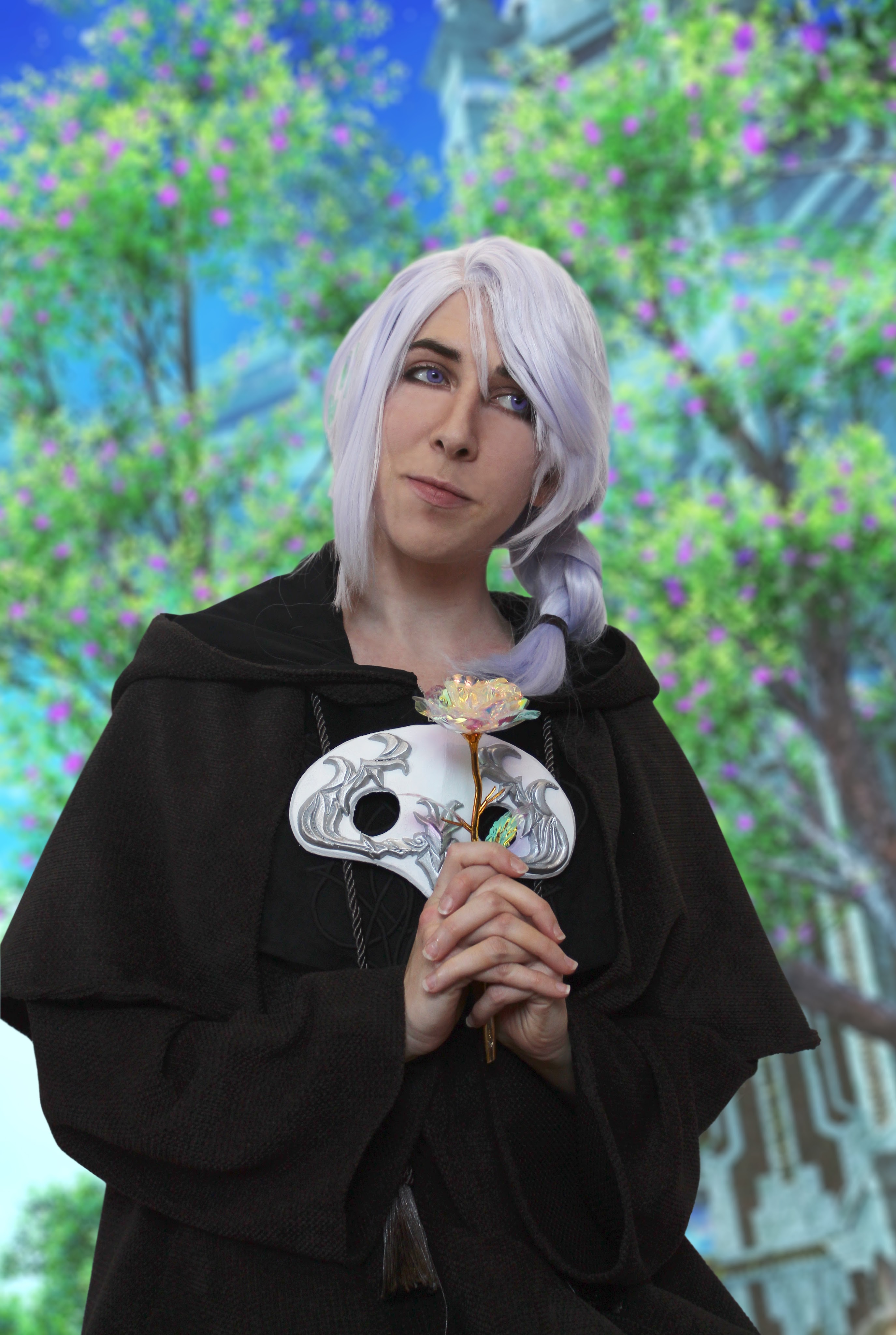

Cosplay, at its best, unites fans and creators in shared joy for the characters and stories they love. No matter their methods or materials, that joy was shown tenfold in the countless sophist robe cosplays following the release of Endwalker, particularly as conventions started finding their footing once again. “I think [these robes] show off how far I’ve come not only as a seamstress, but as a person,” Em wrote in her final reflections. “FFXIV has done countless good things for me, and I count sparking my creativity like nothing else as one of those things.” The opportunity to create Hythlodaeus and Venat for two of her friends, as well as “seeing other people who used [her] sewing pattern to make their own” robes, “was an indescribable feeling.” Malinda recalled seeing many such sophist robes while she attended ACEN 2022, a sentiment echoed likewise by Naaru echoed when she was able to meet “some amazing people” while “roleplaying as Hythlodaeus” at Japan Expo. Joyce remembered with fondness her own cosplay group that finished their costumes for a special Pandaemonium shoot just before Patch 6.2 released, which—just like the XIV cosplay community sharing resources and knowledge sparking so many versions of the sophist robes to life—needed “everyone pitching in somewhere.” The memory of wearing her cosplay was more bittersweet for Niku, who finished her robes in time for the FFXIV 2021 FanFest cosplay feature, while still in the height of the pandemic. “It gave me NA Fan Festival 2018 nostalgia,” she recalled, “being a finalist on the stage with [my friends] again. . .It just made me miss them even more.” The costume holds a special memory for her despite the bittersweetness, however, tying all the way back to the inspiration that she worked into every detail: “After I finished it . . . I was given a 1925 copy of Twenty Thousand Leagues Under The Sea, the one that’s in one of my accompanying photos. You cannot get more Amaurot vibes than that.”
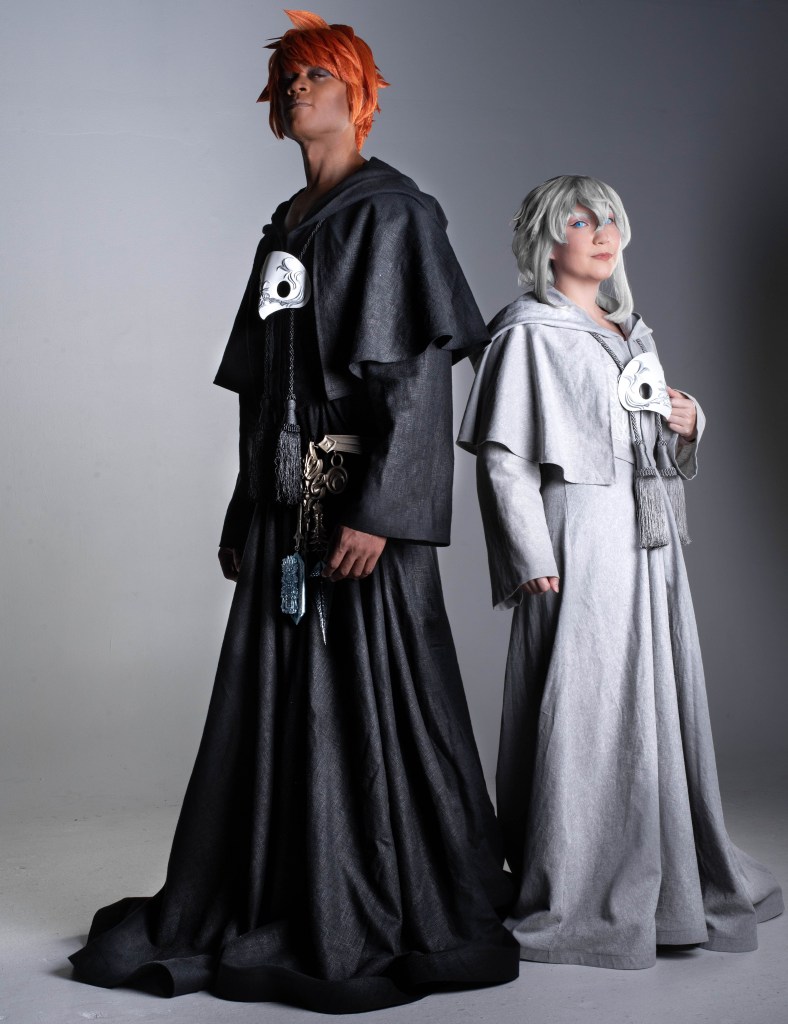
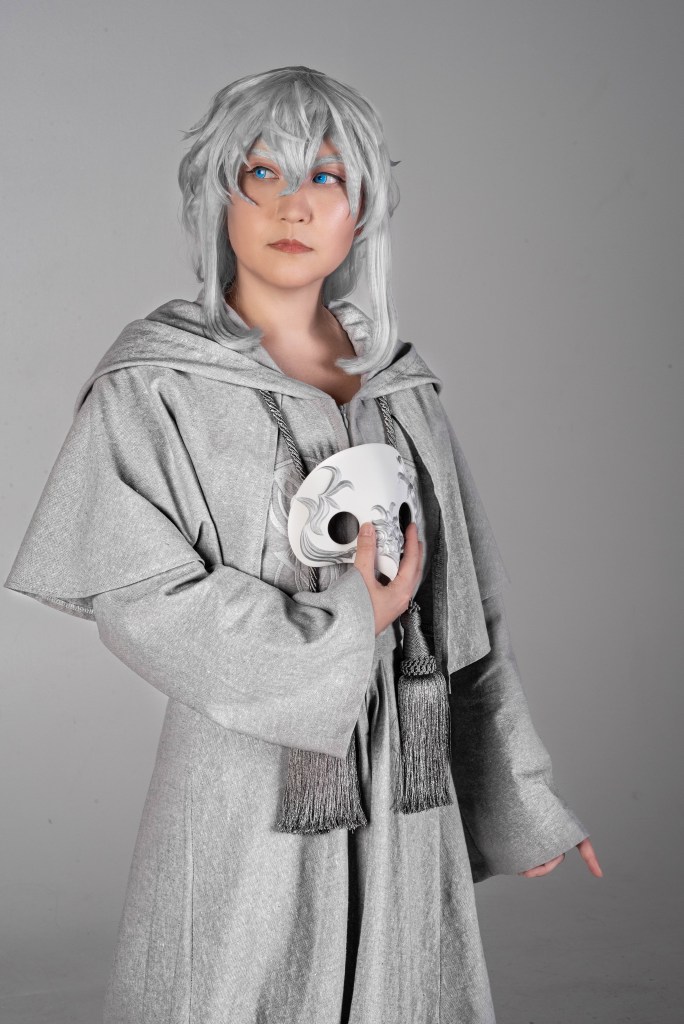
Photographer: Atlas_The_Doggo
In the wake of the past three years, and while still navigating the ever-changing circumstances in our day-to-day, the pandemic has been an inevitable influence in the cosplay community, and one widely shared by those who embarked on the journey of creating the sophist robes. OiNoya was particularly proud of her robe in the end, as it was her “first cosplay [she] made in a good while due to the pandemic and lack of motivation,” and she was “proud in general to have made something new.” While polished photoshoots that bring the character to life and highlight the hard work and skill of the cosplay’s creator are often the end goal for these projects, for OiNoya, wearing her Hermes cosplay “was the first time [my friends and I] were able to cosplay together in a good long while,” and that in itself was unforgettable. What could better embody the spirit of Endwalker, then, than that of sharing invaluable friendships and joyful memories in the wake (and midst) of times riddled with uncertainty and despair? While reflecting further on her personal experience in FFXIV and creative journey with the sophist robes, OiNoya concluded, “Elpis was such a beautiful and meaningful part of this expansion, and bringing to life some of these aspects through cosplay is how I believe how I best express my love for this game and the community as a whole!” FFXIV players might not save an entire world by uniting in cosplay, but when times are dark and often only seem to grow darker, sometimes a single light can forge the path ahead—and if that light is the shared love of an inspiring story, where hope is found in the farthest reaches of despair, then perhaps the strength to step forward—together—is closer than we realize.


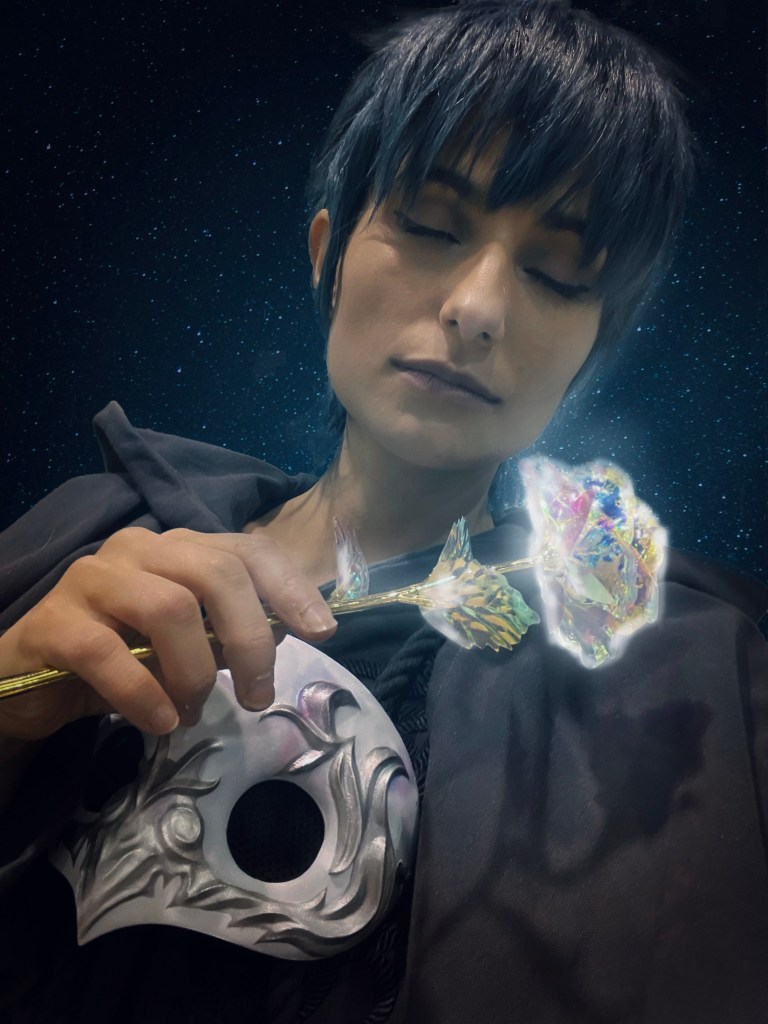

You can follow and support the cosplayers who graciously offered their insights for this article by checking out their social medias!

Photographer: allienoradophotog
Mask: Cobheran & isomoART
CosplayNaaru Twitter | Insta
CrowDalova Carrd
EmUnArum Twitter | Ko-Fi
JuiceCos Twitter
Kappakay Twitter
Malindachan Carrd
MaruWins Linktree
Nikumonster Twitter
OiNoya Twitter
Wifeintheattic Twitter
 Inquiries of Art
Leave a comment