(Originally published Spring 2019)
MAGfest 2019 was a roaring con of music nerds, DJs, cosplayers, and gamers of every stripe gathered together for an exciting but exhausting four-day party. Misha and Constantine were still in cosplay despite nearing the end of the day, but I’d already broken down and changed into my post-cosplay outfit of leggings and an oversized t-shirt with a carbuncle logo that reads “Carbucks Coffee.” Feeling self-aware of my leisurely attire, I couldn’t help but ask, “Can you sit in those?” while motioning to their stunning costumes of Omega-M and Omega-F. They laughed and shook their heads. Their easy smiles did not betray a hint of exhaustion. Professional yet genuinely amicable, they were a pleasure to speak with, and their passion for their costumes and the materials that inspire them were the shining stars in our interview that followed.

Tell us a little about yourselves! How did you both get your start cosplaying?
Misha: I first started making costumes with my high school theatre crew, and that’s where I first got really familiar using a sewing machine. The only art-focused college I applied to at all was Parsons, and I started in business management. Eventually I switched from fashion business to fashion design straight up. Now, working in the fashion industry, I like to keep costuming as a hobby. My profession is so uptight, with clear, defined, tailored lines for a consumer. With cosplay and costuming I can express more creativity and make something out of my own mind and heart.
Have you been able to push the boundaries of your costumes by working together in ways you couldn’t when you were creating cosplays individually?
Constantine: Misha has really inspired me when it comes to sewing. His sewing skills are phenomenal while I still lack in it! But he’s taught me a lot about fabric and patterning costumes.
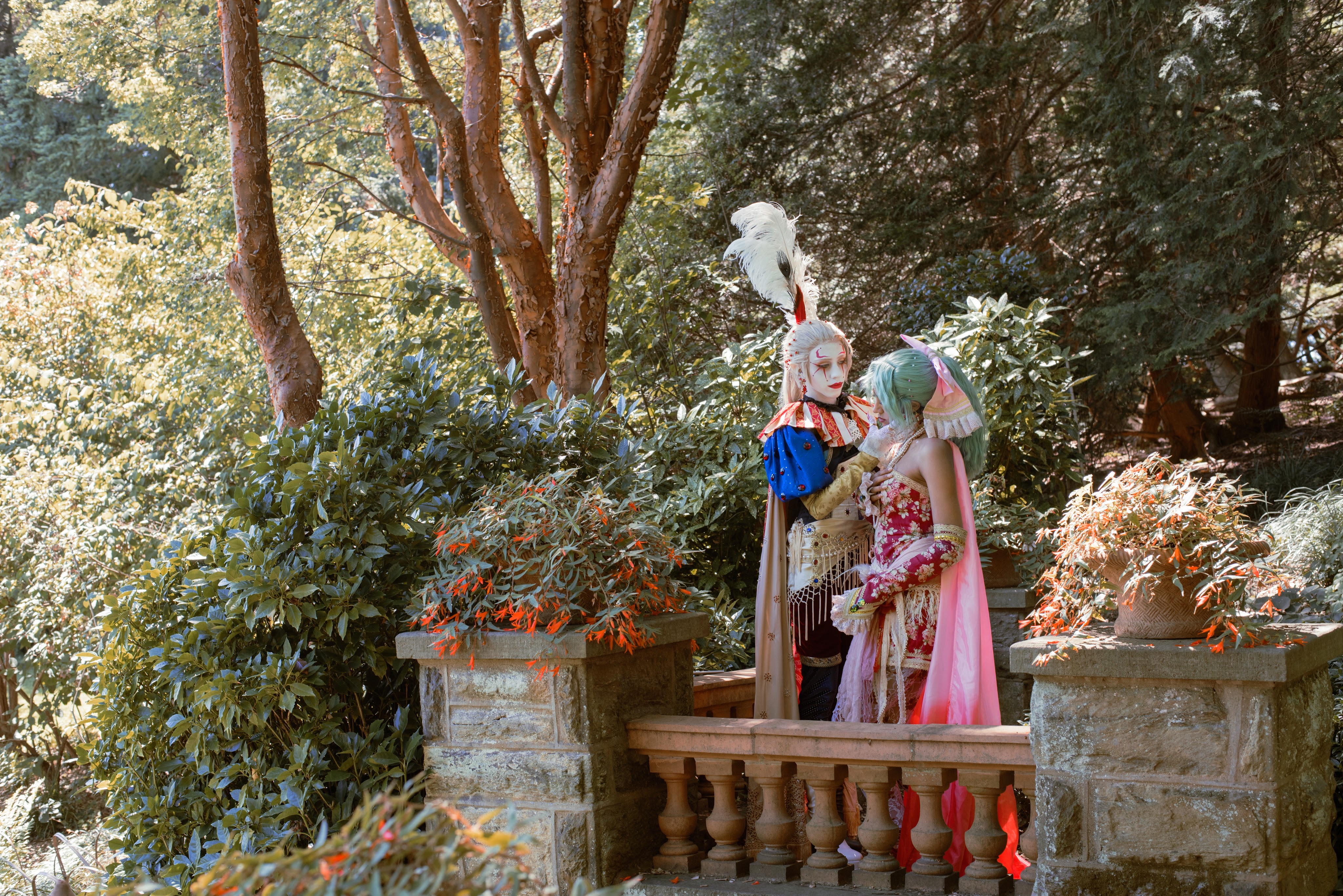
Misha: We both have the same core aesthetic on costuming that we enjoy, so we always end up in these really niche ideas that not so many people recognize but give us a lot of joy. Yoshitaka Amano’s artwork is a big inspiration for us, and that drove us to Omega because the designs look like the box art that he drew for the original Final Fantasy 14. We were so impressed by how beautiful the design was, we had to do it.
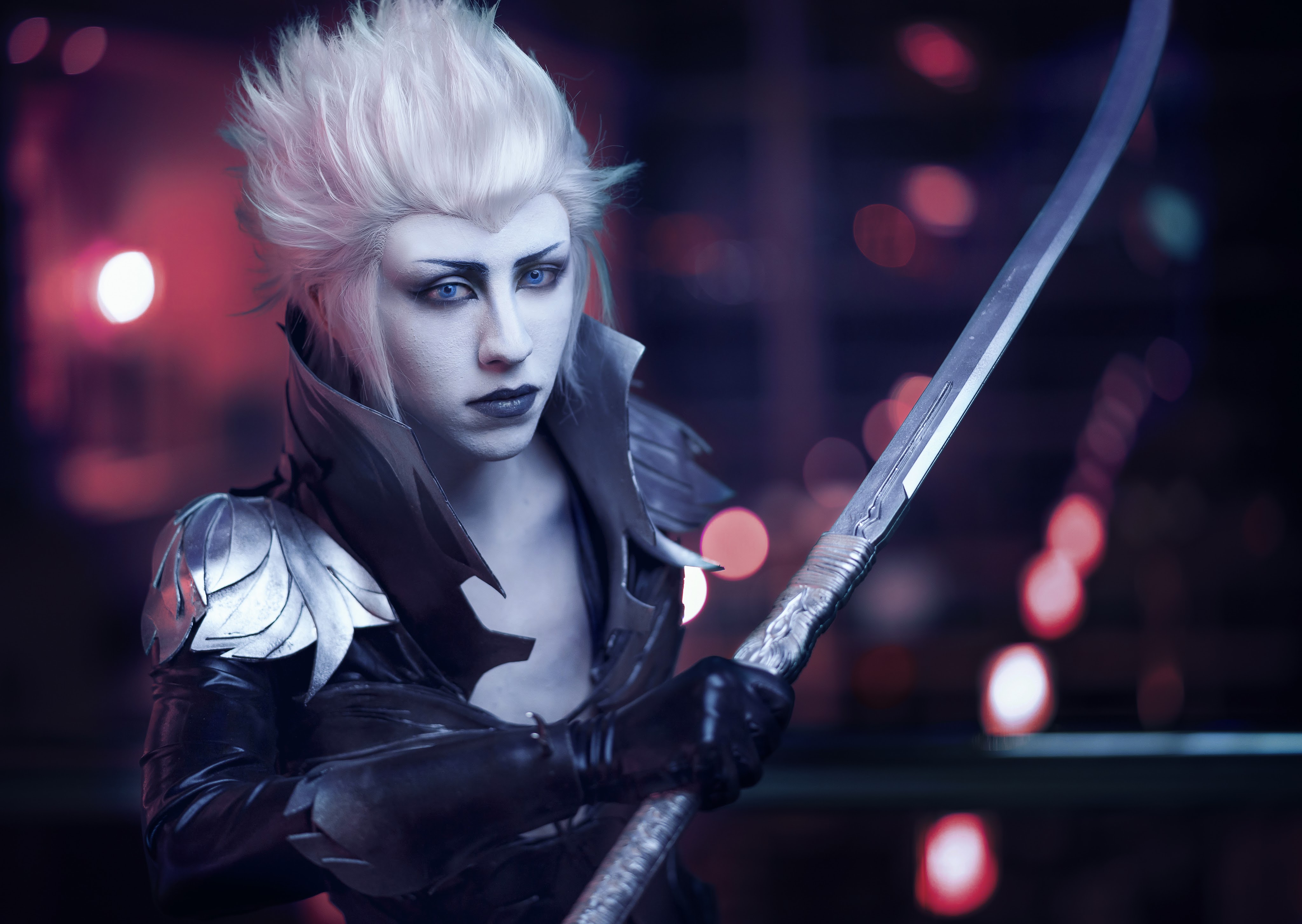

You both bring elegance and poise to the characters you portray, and make it look effortless. I’m sure that grace takes a lot of practice, though.
Misha: Constantine has modeled previously and helped me a lot with posing and makeup and things where I start to fall short. They help me pick up the slack in their own experience both in real life and making things as a hobby. So together we make some interesting things!
Constantine: I grew up around my mom who was and still is a model. So I guess I try to emulate the experience I have from watching her when it comes to photos or videos, and he picks up on that.
Misha: [laughing] They teach me everything. I also like to listen to music that suits the character when I craft or design. I often decide on a song that encapsulates that character’s mood to get into their headspace before a photoshoot, though I don’t do it on location shoots as much as I’d like.
Your cosplays always feature a lot of attention to detail in the makeup. Was makeup always a priority in your costumes, or did that come later?
Constantine: I’ve been practicing makeup since I was really young. One of my first major cosplays was Midna from Legend of Zelda: Twilight Princess, so I really had to learn how to do certain things to get that look. I learned a lot from videos and other tutorials when I was working on Midna, but I also put my own flavor and twist into it. Lots of practice, lots and lots of practice!
Misha: I always had a very specific way of doing costuming makeup, but after a while I noticed that Constantine did things that looked really nice and I thought, “Wait, I never did that myself.” It was little details like paying attention to the structure of the character’s face and using the appropriate makeup to contour and transform my face into theirs, then taking it a step further to make a realistic interpretation of the character, which is number one for me. I used to be a little more shy with makeup, but I realized I could do more to individualize each character, so over time I’ve been able to improve on that after seeing Constantine’s work.
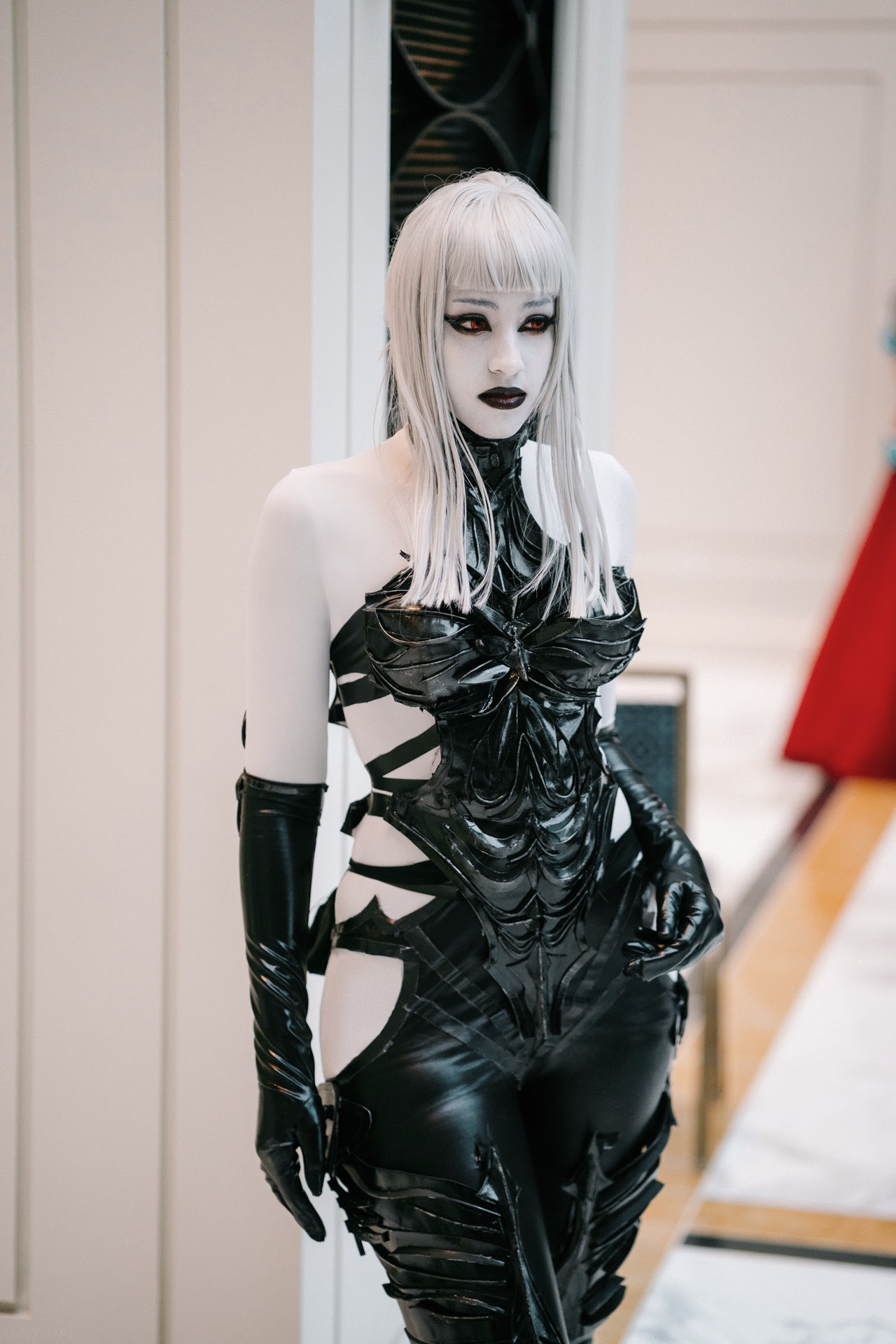
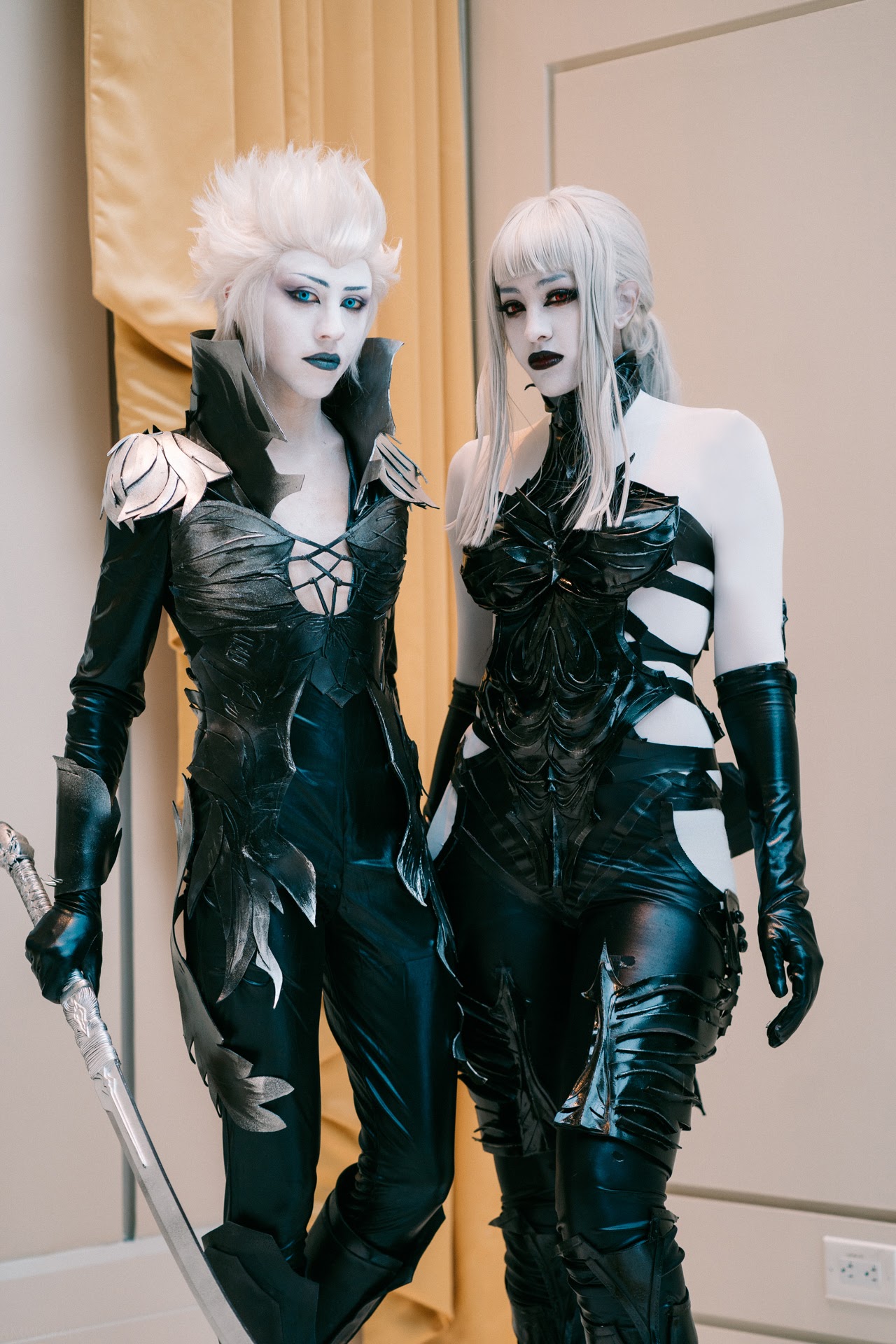
You strive for accuracy in your cosplays, but do you also add your own personal touches?
[Both are nodding and laughing fervently “yes.”]
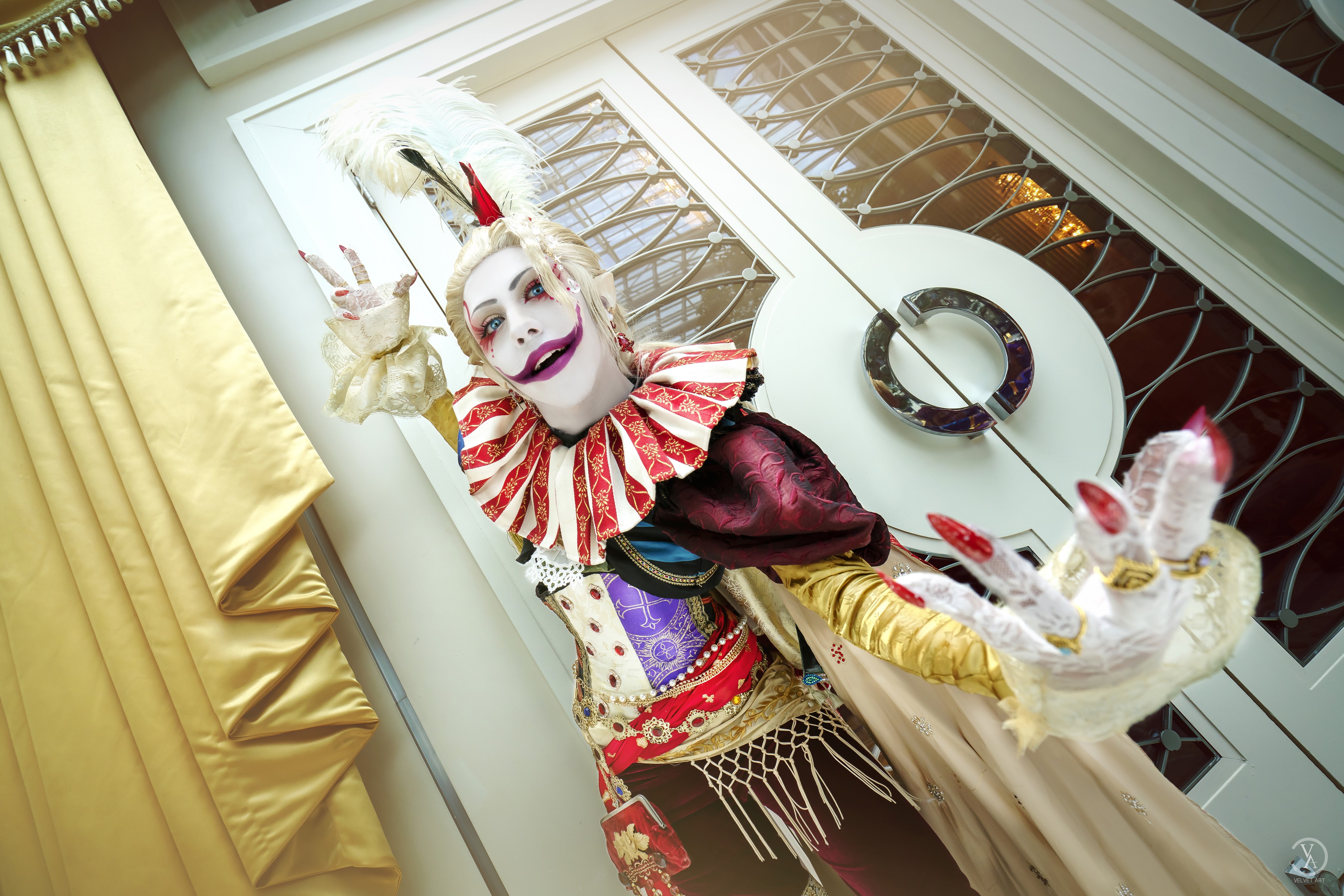
Misha: I had to balance this costume alongside work and wasn’t able to budget out the full time required for it. So in its current version there are a lot of elements I ignored and also a lot of elements that I added to have the costume make more sense in construction. Usually video game designers are not clothing designers, so even if you want to go for complete accuracy, you still need a degree of creativity to figure out how to translate it to real life. I just take that a few million steps further and base a lot of my own designs in the costume as well. Yoshitaka Amano’s art in particular inspires our costumes partly because of the fluidity of the lines and the rawness of the feeling in his work. We like the freedom to emulate that fluidity in our creations.
Constantine: It’s not so much the accuracy that’s important in a costume. If you have freedom to do your own thing, like our costumes being inspired by Amano’s work, then I say go for it. I’m also inspired by Kojima Ayami; I’ve always loved that kind of dark look with a lot of detail, which is why I always try to push for detail in my costumes and makeup. Sometimes simple is better, but if I’m able to give a little something extra then I always go for it! It’s important that you feel comfortable with your costume and that you love what you make at the end of the day. So as long as you’ve got that feeling, you’ve won!

What was the most difficult part in the creation of your cosplay, and what are you proudest of now that they’re finished?
Constantine: The hardest part was figuring out how to shape everything to my body. I never I really had an armor set quite like this, so it was really new trying to figure out shape, but once I got it I was amazed! I was like, “Finally I did it!” So, I’d say that was extremely hard for me. But I got it!
Misha: Patterning out armor, and patterning in general, is my biggest weakness. I’m a lot more skilled at fabric and working with fabric and draping fabric. So the whole armor set for Omega-M really took a toll on me, especially since I wo3rk full time. I had to do a lot of spray painting outside, and it was too cold for the paint to dry properly. So I do want to make it look even nicer when I can in the future. I feel the first round of a costume is always a trial run, and then I really start to feel confident by the second or even third time. Kefka was the same; I premiered the costume at Anime Expo, but knew there was a lot I wanted to refine. I improved it two more times and changed the makeup to the more recent Dissidia style as opposed to the older FF6 style. So I had a lot of evolutions of Kefka and I think Omega-M will be the same.
Cosplayers sometimes throw themselves into projects so difficult that they exhaust themselves in the process and are sick of even looking at the their cosplay. So it’s refreshing to hear you say, “Well, this was a first attempt” and actually look forward to improving your costume in the future.
Misha: We put a lot of time and love and craft into these costumes, which is why we also don’t pump out cosplays nearly as fast as some costumers out there. We’re really slow paced compared to most cosplayers, but we kind of enjoy it that way. At least I know that I do, because I can really target characters that I deeply care about compared to when I would kind of jump around a bit more. I can really focus and make something that I can ultimately look back on and think that was a piece that I made that I feel confident about, and that satisfaction means a lot to me.
Do you have any advice for beginning cosplayers who are inspired or intimidated by the work you two do, and wonder how they can learn to create costumes like yours?
Misha: I consider myself more of a costumer than a cosplayer right now because I feel there’s a great deal of pressure, especially on people that are probably just starting to grow up in the current environment, to constantly put something out and have it be perfect first time and really throw themselves into it. People crave the content, and creators think, “Oh, I want to impress my followers, I want to impress people who are watching.” There’s so much emphasis on perfection and being the best, or getting stuff out there to get the views and likes. I can’t fault them; that’s how the algorithms are structured! But in terms of wanting to come out with a quality costume that you really love, it’s important to love yourself as well.
The kind of satisfaction that I receive from my costumes is when I can, as Constantine said, spend my time to make something that I feel good about. Because at the end of the day, it’s just me in my room making things. I never like looking back and seeing a of mess of stuff that was just thrown off to the side, only worn once or only put together once for a show. Now that I’ve slowed down I’m really starting to appreciate that. There’s nothing bad about going at a slower pace, and there’s nothing bad about coming back to things, there’s nothing bad about being imperfect.
Constantine: I would say patience. Lots of patience and pacing yourself is extremely important. Putting off a costume like this to the last minute is just not a good idea. Unfortunately that’s kind of what I did, because of a bunch of other things going on, but if I had paced myself and taken more time to draw out a plan and pattern things out in a certain way, the costume probably would have come out differently. But it’s like Misha said – you have the first trial, and your second trial, and your third trial, so there are trials to it. But in the end I’d say patience. It’s a good thing.
 Inquiries of Art
Leave a comment